Home energy work in Cannes:
heat pumps, air conditioning, solar and electrical
In Cannes the calendar constrains the work as much as the building does. Between the letting season and the congress diary, there are only so many months when anyone can get in.
Cannes has three things working against a simple installation: a high proportion of copropriété ownership, two of the most heavily protected streetscapes on the coast, and a property market where a large share of apartments are let out for part of the year. All of it is workable, but in Cannes the order of the steps and the time of year decide whether a system runs this summer or next.
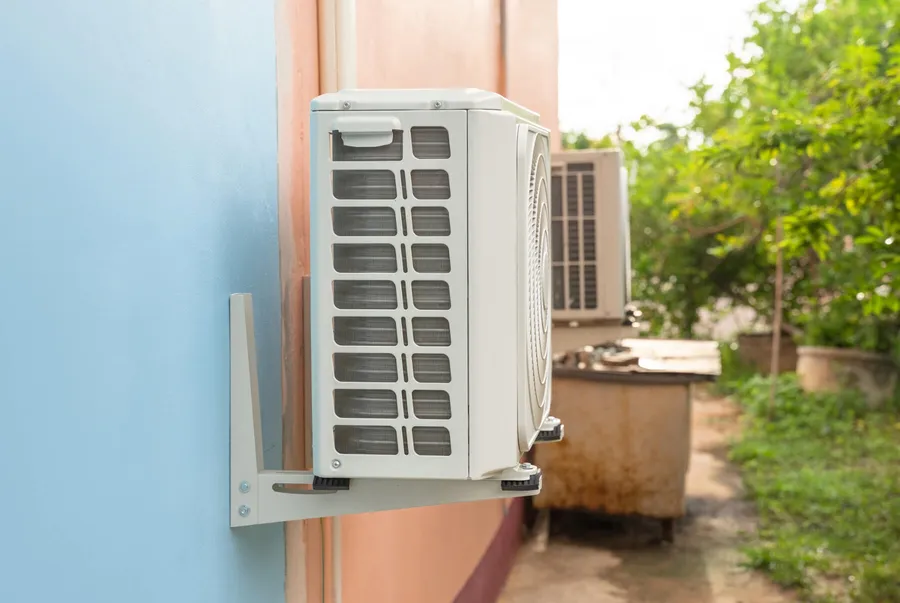
Why does installation work in Cannes squeeze into October to February?
A rental apartment cannot have its ceiling opened in July. A building full of rental apartments cannot have scaffolding on the façade during the season either, which is why assemblies often schedule communal work for late autumn. The practical effect is a narrow window, roughly October to February, when access is easy and contractors are available.
If you want a system working for next summer, the decision needs making the autumn before. Leaving it until spring generally means waiting another year, because the assembly vote and the installation both have to fit inside the same window.
Where can an AC unit go in Le Suquet's protected sector?
Le Suquet, the old town on the hill above the port, is a protected sector overseen by the Architecte des Bâtiments de France. In practice that means any exterior change is judged on how visible it is and how it sits against the historic fabric. Air conditioning does get approved there, just never as a condenser bolted to a street elevation.
What usually works is moving the hardware: a rear elevation, a courtyard, a roof position set back out of sight. That is a design decision, so it belongs at the survey stage rather than after equipment has been ordered.
Can you put equipment on a listed Croisette façade?
Several frontages along the Croisette are registered as historic monuments, which is a stricter category again than the protected sector. On those elevations, visible external equipment is effectively off the table.
Owners in those buildings still get cooling; the plant goes where the street cannot see it, sometimes as one shared installation for the whole building rather than unit by unit, which turns it into a copropriété conversation.
How does a Cannes copropriété decide on an outdoor AC unit?
The same way as anywhere else in France. Under the law of 10 July 1965, work affecting common parts goes to the general assembly, which votes. What differs in Cannes is that a building with many non-resident owners can be slow to assemble a quorum, and heritage constraints mean the syndic may reasonably want an architect's opinion before putting a proposal to the vote.
Arrive with the noise figures, the dimensions, the exact position and a drawing. Our copropriété AC guide lists what to prepare.
Why Le Cannet and Mandelieu are simpler than central Cannes
Move uphill to Le Cannet or west to Mandelieu-la-Napoule and the housing shifts towards detached and semi-detached property with its own land. No assembly vote, more room for an outdoor unit, and usable roof area for solar panels.
Théoule-sur-Mer is the exception on that side. The Esterel drops steeply to the sea and access to some properties is genuinely difficult, which shows up as a labour cost rather than a regulatory one.
From Le Suquet to Théoule-sur-Mer: where we work
Across Cannes and Le Cannet, west through Mandelieu-la-Napoule to Théoule-sur-Mer, and up to the coast-side edge of Mougins. The full commune list is on areas we cover.
Common questions about home energy work in Cannes
What happens if the assembly refuses our proposal?
A refusal is not always final. Often the assembly has objected to one thing: the noise, the appearance, or the precedent it would set. Understanding the recorded reason lets you come back with a revised position, a quieter unit or a shared scheme for several apartments. Resubmitting a modified proposal to the next assembly is normal.
Who pays for a shared cooling system in a copropriete?
If the assembly authorises a collective installation, the cost is usually apportioned by tantiemes, the ownership shares set out in the reglement de copropriete. That can differ sharply from splitting it per apartment, so it is worth checking your share before voting rather than after.
Do we need a declaration prealable as well as the assembly vote?
They are separate approvals and both may apply. The assembly authorises you to alter a common part; the mairie deals with the change to the building's external appearance. In protected areas around Le Suquet and the Croisette the mairie consults the Architecte des Batiments de France before deciding.
Can a holiday let be worked on between bookings?
Short gaps rarely suit anything beyond a straightforward swap. Running new pipework or cabling means dust, access to several rooms and a working day that does not stop at check-in time. Owners who let through the summer generally block a fortnight in autumn rather than trying to fit the work between guests.