Solar battery storage on the Cote d'Azur, with English-speaking specialists
A battery lets you use your solar power after sunset, or while you're away. In France the payback is slow, and a battery on the same invoice as your panels raises the tax on both. Here's what the French rules allow, which systems installers fit, and what to budget.
Looking for an English-speaking installer on the Côte d'Azur? Get quotes →
How it works
What does battery storage do in France, and what are its limits?
Around midday your panels usually make more than the house uses. Without a battery, that surplus goes to the grid. With one, it charges the battery, which then runs the house through the evening and night.
If you sell surplus to EDF OA, the battery may store only power from your own panels. The contract requires a set-up that guarantees it. So you can't fill it with cheap off-peak grid power and use it at peak times, as some UK owners do. The whole return is the electricity you stop buying.
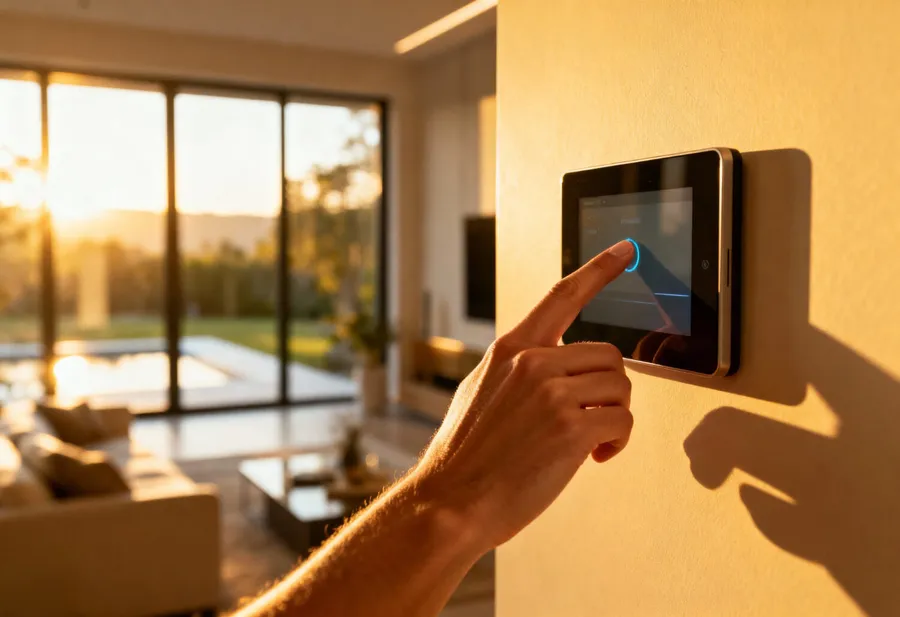
For a second home, some of the value sits outside the payback sum. A battery set up for backup keeps essentials running in a power cut. It can also run the house on your own solar power while nobody's there. Neither shows up in a payback calculation, but both are worth asking about.
Systems and sizing
Which home batteries do Riviera installers fit, and what size do you need?
Four names come up most often in quotes here. The Enphase IQ Battery connects to almost any solar system, so it's the easy choice for adding storage later. It comes in modules you can add to. SolarEdge batteries work best with a SolarEdge system and may mean a new onduleur if you have another brand. BYD Battery-Box is widely fitted in Europe, modular and works with several brands. Tesla Powerwall has good software and backup, but Tesla has fewer installers in France than in the UK or US, which can slow repairs.
For a household of three or four with normal evening use, 5-10 kWh usually covers the night from a 3-6 kWp solar system. If a heat pump or car charger runs into the evening, 10-20 kWh may be worth it. A battery that never fills up is wasted money, so ask the installer to size it from your real consumption.
Get matched with vetted English-speaking installers in your area.
Get quotesWhat to budget
What does battery storage cost in France?
These are prices for a battery installed and commissioned, with no grant deducted (there isn't one). Fitting it at the same time as new panels costs less than adding it later, because some of the work overlaps.
Figures are guidelines. Installation costs vary and tax rules change.
Confirm current amounts with your installer before signing.
The saving per kWh is the gap between the 0.20 EUR/kWh you'd pay the grid and the 1.1 c EUR/kWh EDF OA now pays for surplus. The June 2026 tariff cut widened that gap sharply. Most households shift 2,000-3,000 kWh a year through a battery, because it rarely empties and refills fully every day. That saves roughly 380-570 EUR a year.
A battery worked through a full cycle every day shifts about 3,500 kWh and saves nearer 680 EUR. Our battery payback guide runs that calculation. Simple payback on a 6,000 EUR battery is 11-16 years, at or beyond the warranty period. For second-home owners, backup and running the house unattended can matter as much as the payback.
Financial aid
Why does a battery raise the TVA on your solar panels?
No grant pays for a home battery. MaPrimeRénov' has never covered solar PV, so panels are not eligible, and batteries aren't on its works list either. The prime à l'autoconsommation was abolished in June 2026.
The tax trap matters more. Panels alone can qualify for 5.5% TVA (up to 9 kWc, low-carbon panels, an energy management system and an RGE QualiPV installer). Put a battery on the same job and the whole invoice goes to 20%, panels included. The tax authority doesn't treat a battery as an accessory to the panels.
If you want both, ask the installer to quote and invoice the battery as a separate job. Then check the TVA rate on each devis before you sign.
Coming from abroad
What's different about home battery storage in France?
UK
UK time-of-use tariffs (Octopus Agile, Go and others) make it pay to charge a battery cheaply overnight and use it at the evening peak. France's Heures Creuses / Heures Pleines tariff has a smaller gap between its rates. And under an EDF OA surplus contract the battery can't charge from the grid at all. In France a battery stores your own solar power, nothing more.
US
If you're used to net metering, or to a battery that earns money from grid services, neither applies under a standard French solar contract. Exports earn 1.1 c EUR/kWh. Treat a battery here as a way to use more of your own solar power.
Germany
Home batteries took off in Germany once feed-in rates fell and using your own power became worth more than exporting it. France has now reached the same point, with an export rate of 1.1 c EUR/kWh. The tax rules differ, but the logic is familiar. Sonnen and E3/DC batteries are also sold in France.
Choosing a contractor
What should you look for in a battery storage installer?
For new panels plus a battery, the solar rules apply: an RGE QualiPV installer, who also handles the EDF OA application. The battery has to be declared on that contract, so make sure the installer does it.
For a battery added to existing panels, ask whether the installer has worked with your onduleur brand. Some batteries only work with matching equipment. An installer who quotes without asking what you already have hasn't checked.
Most batteries come with an app. Ask the installer to set it up and show you your self-consumption rate and the battery's charge level.
For a second home, ask whether the battery can run on its own while the house is empty. That means self-consumption mode, protection against running flat in winter, and alerts you can see from abroad. Most systems can do it, but it has to be configured at installation.
French terms
French terms you'll meet on a solar battery quote
Key French terms for this service
Questions
Frequently asked questions about solar battery storage
If your question isn't here, send it with your request and we'll answer it directly.
On money alone, rarely. Each kWh a battery moves from export to your own use saves about 0.19 EUR, so a 6,000 EUR battery pays back in 11-16 years, at or past its warranty. It makes more sense if you want backup power, or a second home that runs itself while you're away.
Usually, yes. Some batteries connect to almost any system, which makes them the easy retrofit. Others only work with a particular brand of onduleur, and you may need to replace yours. Your installer should check your existing equipment before recommending one, and the battery has to be declared on your EDF OA contract.
Not if you sell surplus to EDF OA. The purchase contract requires a technical set-up that guarantees the battery stores only power from your own panels. So the off-peak trick used in some countries isn't open to you, and the battery's value comes from solar power you'd otherwise export for 1.1 c EUR/kWh.
Only if the system is specified for backup. Without a backup function, a grid-connected battery won't power the house during an outage, and backup adds cost. If this matters to you, say so before the devis is written, and ask which circuits the backup will keep running.
Most lithium iron phosphate (LFP) batteries carry a 10-year warranty or a set number of cycles, whichever comes first, and guarantee 70-80% of their capacity at the end. Real lifespans of 12-15 years are realistic. Summer heat is the main risk here, so ask where the battery will sit and whether that spot stays shaded.
Sources
Official sources for solar battery tax and contract rules
- BOFiP: BOI-TVA-LIQ-30-20-97, TVA on solar electricity equipment Why a battery on the same job as the panels puts the whole invoice at 20% TVA.
- Légifrance: arrêté of 6 October 2021 (solar purchase conditions) A battery under an EDF OA contract may store only power from your own panels, and has to be declared in the contract.
- Légifrance: arrêté of 1 June 2026 The 1.1 c EUR/kWh surplus rate behind the battery savings sum, and the end of the prime à l'autoconsommation.
- Service-Public.fr: MaPrimeRénov' (F35083) The list of works MaPrimeRénov' funds, which has no entry for home batteries.
Rules checked against these sources in September 2026. Cost ranges are our own estimates and are not drawn from these sources.