Building a swimming pool on the Côte d'Azur
The builder's quote is the biggest cost of a new pool, but it isn't the only one. A French pool also needs a mairie (town hall) filing, a safety device the law requires and a tax declaration within 90 days. Most summers, a préfecture order also decides when you can fill it.
Need an English-speaking pool builder on the Côte d'Azur?
Get quotesOn this page9 sections
- What pushes the price of a new pool up on a Riviera plot?
- Which permit does a pool need, and can a copropriété or lotissement refuse it?
- The pool safety device: four legal options and a 45,000 EUR fine
- Pool TVA at 20% and the 90-day tax declaration
- Can you fill a new pool during an Alpes-Maritimes drought order?
- Looking after a pool at a second home you leave empty
- What a pool builder's devis should show before you sign
- French pool-building terms on a Riviera devis
- Frequently asked questions about building a pool on the Côte d'Azur
What drives the price
What pushes the price of a new pool up on a Riviera plot?
On a Riviera plot, the ground and the way in set the price long before anyone talks about tiles. Few Riviera gardens are the flat, open plot a builder would choose.
Access comes first. If a full-size digger can't reach the garden, the hole is dug with smaller machines, and the spoil leaves by the same narrow route. Rock takes far longer to break than soil takes to dig. A sloping plot often needs retaining walls, and sometimes a soil study, before the pool can sit level.
Then the pool itself. A coque, a factory-made shell set into the hole, limits you to the maker's shapes. A concrete pool takes any shape and depth, and costs more. Inside it, a liner is the cheapest finish but needs replacing every seven to ten years, while tiles cost most and last longest. A pool heat pump is a separate unit from the house's, and no house grant applies to it. The safety device, the filing and the pool tax come on top.
Get at least two written quotes for the same water surface, shell and finish, with digging, spoil removal, filtration and the safety device on separate lines.
Permits
Which permit does a pool need, and can a copropriété or lotissement refuse it?
The mairie looks at the surface of water, not the deck around it. Up to 10 m² needs no filing outside a protected sector. From 10 to 100 m² you file a déclaration préalable and wait a month. Above 100 m², or with a cover or shelter taller than 1.80 m, you need a permis de construire. Near a listed monument the Architecte des Bâtiments de France reviews the file, the wait doubles, and even a small plunge pool needs a déclaration.
The PLU adds its own limits. It can set how far the pool must sit from the boundary. Many coastal plans also keep a share of each plot as unpaved soil, and a pool and its deck count against it. Ask the service urbanisme before the builder draws anything.
In a copropriété (the building's co-ownership), the garden is usually a common part, even when only your flat can use it. Digging a pool there needs a vote at the general meeting, and a larger majority if the pool takes over common land. The syndic (the building's managing agent) can't approve it alone. On a lotissement (a housing estate), read the cahier des charges. It's a private contract between the owners, and it can limit or ban pools. The mairie doesn't check it when it approves your filing, so a neighbour can still enforce it in court.
Safety
The pool safety device: four legal options and a 45,000 EUR fine
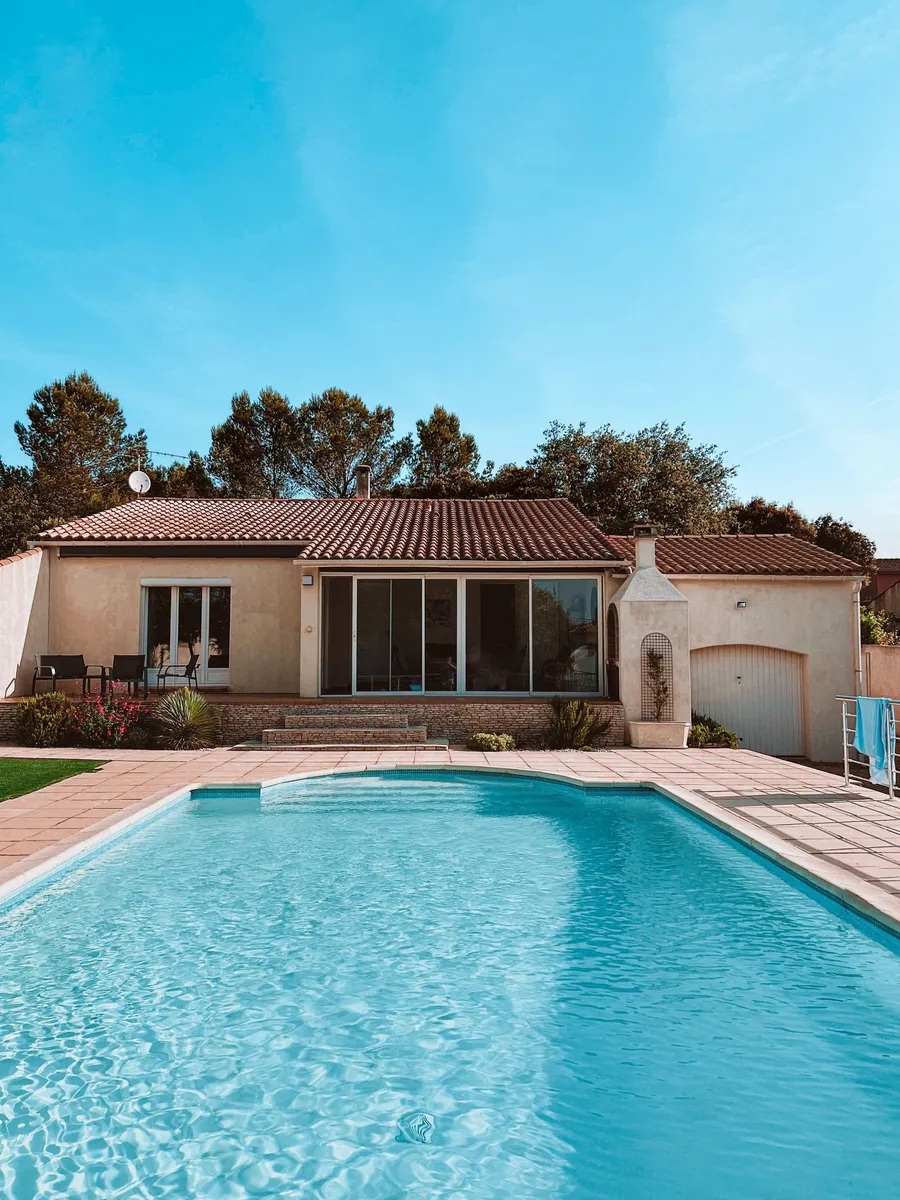
Every private outdoor pool that's in-ground or partly in-ground must have a device that stops a young child falling in unseen. That applies to a pool you inherit with a house as much as to a new one. The owner who has none risks a fine of up to 45,000 EUR.
You choose one of four: a barrier with a self-closing gate, an alarm, a safety cover, or a shelter that closes over the whole pool. An alarm is the cheapest, but it only sounds once a child is in the water. A barrier needs nothing from you once it's up. A cover keeps leaves out and heat in. A shelter costs the most.
Each device has to meet the French standard for its type, and the installer must give you a written note on using and maintaining it. Keep it with the devis (written quote). Before you sign off, ask the installer to show it working: the barrier gate should swing shut and latch, and the alarm should sound when tested.
Tell us about your pool plans, and we'll put you in touch with an English-speaking pool builder who quotes in writing.
Get quotesTax
Pool TVA at 20% and the 90-day tax declaration
Building a pool is taxed at 20% TVA (French VAT), including at a house over two years old. The 10% renovation rate doesn't reach it, and neither does repair work on an existing pool: a new liner, a new pump or a recoat is also at 20%. If the same builder also works on the house, the devis should show those lines at their own rate.
Once the pool is finished, you have 90 days to declare it on impots.gouv.fr, under "Gérer mes biens immobiliers", or on paper form H1. Declare on time and your commune may give you a two-year break on the taxe foncière for the pool. After that, the taxe foncière goes up for good. The tax office finds undeclared pools from aerial photos, so if you buy a house whose pool isn't on the bill, declare it yourself.
The same declaration sets the one-off taxe d'aménagement. It starts from 251 EUR per m² of water in 2026, multiplied by the commune's rate (1% to 5%) plus 2.5% for the Alpes-Maritimes. An 8 x 4 m pool in a commune at 4% comes to about 520 EUR. The builder's quote won't include it, so put it in your budget yourself.
Water
Can you fill a new pool during an Alpes-Maritimes drought order?
Not always. Most summers the préfet puts parts of the département on drought alert. From the alerte level, filling a private pool is banned. At the top level, crise, even topping one up is banned. The levels vary by commune and change through the season, so ask the builder to check yours on the government's VigiEau site before the water goes in. A breach can cost up to 1,500 EUR.
For a new pool, this is a scheduling problem. A build that finishes in July can sit empty for weeks. Aim to finish in spring or autumn, and ask the builder how the shell and liner are protected if an order stops the first fill.
Second homes
Looking after a pool at a second home you leave empty
A pool that nobody checks for three weeks in August turns green. If you're abroad for most of the season, budget for a weekly visit from a pool-care firm or a caretaker. A cover cuts the cleaning and keeps a child out while the house is empty.
Winters here are mild, so many owners keep the filtration running on short cycles under a cover. Others shut the pool down for winter. Leave that choice to whoever maintains the pool, and never drain it yourself.
Before you sign
What a pool builder's devis should show before you sign
Once you sign the devis, it's the contract. It should give the water surface in m², since that figure decides both the filing and the tax. It should price the digging, where the spoil goes, and a soil study if the plot slopes or has clay. The shell type, the finish and its guarantee, and the filtration equipment by brand and model should each have their own line.
The safety device belongs on the devis, named by type. So does who files the déclaration préalable. The builder's garantie décennale insurer and policy number should be printed on it, because the décennale covers the shell. A heat pump or other kit added to a pool you already own gets neither the décennale nor the two-year biennale. For those, get the installer's warranty and the maker's in writing. Look for TVA at 20% throughout, and ask what's excluded: the power supply from the house, the first fill of water and the landscaping are common gaps. At the end, walk the pool with the builder and write every defect into the réception record.
French terms
French pool-building terms on a Riviera devis
Key French terms for this service
Related
More on pool permits, gardens and outdoor work
Questions
Frequently asked questions about building a pool on the Côte d'Azur
If your question isn't here, send it with your request and we'll answer it directly.
No. The legal obligation covers private outdoor pools that are in-ground or partly in-ground. Above-ground, inflatable and indoor pools are outside it. The planning thresholds still apply, though, because they depend on the surface of water: a large above-ground pool of 10 to 100 m² still needs a déclaration préalable.
Usually without any filing. A shelter up to 1.80 m high added to an existing pool needs nothing outside a protected sector. Near a listed monument or in a heritage area, you file a déclaration préalable. A taller shelter needs a permis de construire. A shelter that closes over the whole pool can also be your safety device.
They mustn't. For a seasonal let, the barrier, cover or shelter has to be in place and working before tenants arrive, and an alarm has to be switched on and working when you hand over the house. Tenants may not disable it. Put that in the house rules and the welcome pack, and tell your insurer about both the pool and the lettings.
No, outside a protected sector. The tax follows the planning filing, and a pool with 10 m² of water or less needs none. You still declare the pool to the tax office within 90 days of finishing it, because any pool raises the taxe foncière. Measure the water, not the deck.
A leak in the shell or its buried pipework that makes the pool unusable falls under the builder's garantie décennale, which runs ten years from réception. Pumps and heaters carry their makers' warranties. Kit added to a pool you already own has no décennale or biennale, so keep the installer's warranty in writing too. List anything visible at handover, such as a torn liner, because a visible defect left off the record counts as accepted.
Sources
Official sources for pool permits, safety, TVA and drought rules
- Service-Public.fr: building a private pool (F31404) The 10 m² and 100 m² thresholds, the 1.80 m cover rule, protected sectors and the 90-day declaration.
- Service-Public.fr: pool safety devices (F1722) Which pools need a device, the four types, the 45,000 EUR fine, the rules for seasonal lets and the installer's written note.
- BOFiP: BOI-TVA-LIQ-30-20-90-30, outdoor work and the reduced rate Building and maintaining a pool stays at the normal 20% rate, even at a home over two years old.
- Service-Public.fr: taxe d'aménagement (F23263) The 251 EUR per m² of water used for a pool in 2026 and the communal and departmental rates.
- Préfecture des Alpes-Maritimes: drought restrictions Filling a pool banned from the alerte level, topping up banned at crise.
- Service-Public.fr: work by one owner in a copropriété (F31513) Private work on common parts needs a general meeting vote; the syndic can't authorise it alone.
Rules checked against these sources in September 2026.