Garden design and landscaping on the Riviera
A Riviera garden has to get through July and August with little water, often while the owner is abroad. It also comes with duties a UK garden doesn't: clearing scrub near woodland, protected trees and summer watering bans.
Need an English-speaking gardener or landscaper on the Côte d'Azur?
Get quotesOn this page7 sections
- Who designs, builds and looks after a Riviera garden?
- Which plants survive a Riviera summer, and how do you water them while you're away?
- Terrace walls, protected trees and the legal duty to clear scrub on a hillside plot
- What pushes up the price of a hillside garden, and of looking after it?
- What should a written landscaping quote show before you sign it?
- French garden and planning terms you'll meet
- Frequently asked questions about Riviera gardens and landscaping
The French garden trades
Who designs, builds and looks after a Riviera garden?
Three trades share the work, and the names overlap. A paysagiste concepteur designs. It's a protected title in France: only someone with a five-year landscape design qualification, or a recognised equivalent, may use it. The title doesn't stop anyone else from drawing garden plans, so ask what qualification sits behind any designer's name.
A paysagiste, often styled "jardinier paysagiste", builds. That covers earthworks, paths, walls, irrigation and planting. Many also draw a plan for the gardens they build, which suits a straightforward plot. The word paysagiste on its own isn't protected.
A jardinier maintains: mowing, pruning, weeding and scrub clearing on a regular contract. For a second home this is the person you'll deal with most. If they're registered for services à la personne, the state scheme for home services, their bills can earn a tax credit.
On a sloping plot with a pool and terraces, a separate designer often pays for itself because they settle levels and drainage before anyone digs. For replanting beds round an existing house, a good paysagiste's own plan is usually enough.
Planting and water
Which plants survive a Riviera summer, and how do you water them while you're away?
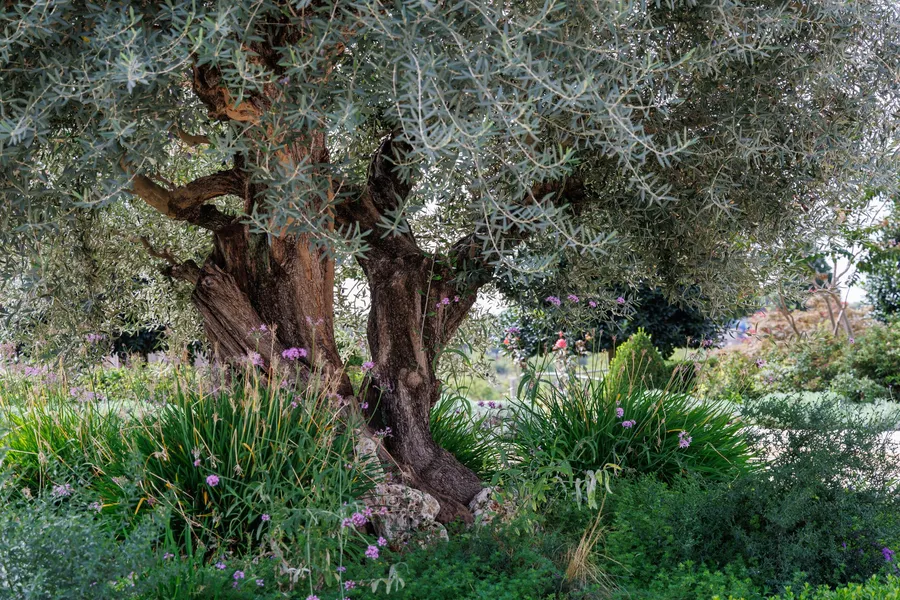
The plants that cope are the ones already growing wild on the hills behind the coast: olives, cistus, lavender, rosemary, and the scrub of the garrigue and maquis. Once they're established, most need little or no summer watering. A green English lawn is the thirstiest thing you can plant here, and a drought order can stop you watering it. Ask the paysagiste to mark on the plant list which plants will need water after their first two summers.
New planting needs regular water for its first summer or two, and you won't be there to give it. Drip lines on a timer put water at the roots at night, which is when the rules still let you water at the alerte drought level. Ask for a controller that a caretaker or the jardinier can check remotely, and for a plan of where the lines run.
A rainwater tank helps with both. The Département des Alpes-Maritimes pays half the cost excluding tax of a tank holding at least 3,000 litres, up to 5,000 EUR. The tank must be buried or sit inside an existing building. Its rules name second homes explicitly, and there's no income condition. Apply before you order anything, because a tank bought first is refused (see our Alpes-Maritimes grants guide).
Most summers the préfet issues drought orders by area. At alerte, you can't water between 8 am and 8 pm. At alerte renforcée, gardens and beds can't be watered at all, day or night. Breaking an order can cost up to 1,500 EUR. Before you leave for the season, ask your caretaker or jardinier to follow the local notices on the government's VigiEau site.
Hillside plots
Terrace walls, protected trees and the legal duty to clear scrub on a hillside plot
Many plots between the coast and the hill villages sit on restanques, the dry-stone terrace walls that hold up an old olive slope. They drain through the gaps between the stones. A wall that bulges, or one someone has pointed with cement, is the one that fails after heavy autumn rain. Rebuilding a retaining wall needs no planning filing, unless the plot is in a protected heritage area or near a listed monument. The PLU can still set the materials. Because the wall holds up ground, ask the builder for their garantie décennale certificate.
The PLU map also shows espaces boisés classés, woodland the commune protects. Felling a tree there needs a déclaration préalable, and the mairie (town hall) can refuse it. Dead or dangerous trees are exempt. Communes often protect individual old olives and umbrella pines too, so ask the mairie before a plan moves one.
The duty that catches second-home owners is débroussaillement, the legal obligation to clear scrub. It applies if your house is in woodland or within 200 metres of woods, heath or maquis, which takes in many hillside plots. Outside built-up zones you clear 50 metres round the house, even beyond your boundary, and up to 100 metres where a local fire-risk plan says so. In urban zones it's the whole plot. Tree crowns must stay 3 metres from the house, and low branches come off to 2 metres.
The owner is responsible, even when the house is let. If you're abroad, put the clearing in the jardinier's contract, with the work done before summer and photos sent to you. The mairie can serve formal notice, add a daily penalty of up to 100 EUR, and then send in its own contractor at your cost. Fines can reach 50 EUR per square metre left uncleared.
Tell us about your garden, and we'll put you in touch with an English-speaking paysagiste who quotes in writing.
Get quotesWhat drives the price
What pushes up the price of a hillside garden, and of looking after it?
On a Riviera plot, much of the cost sits in the ground before anything is planted. A slope means earthworks and terrace walls, which are slow, heavy work. Ask whether the stone from a fallen wall can be reused. If a small digger can't get up the lane or down the steps, earth and stone move by hand, so ask how the firm will reach the plot.
Trees and water come next. Felling a tree, or protecting an old olive while machines work round it, adds work, and tree surgery is often a separate trade. Drip irrigation adds pipework and a controller, though it saves replacing plants after a dry first summer. Ask whether carting away green waste is included.
Upkeep is priced by visits. A lawn and clipped hedges need someone every week or two in summer, while an established dry garden needs far fewer. A scrub-clearing zone adds a yearly clearing on top. Ask how many visits the contract covers and what each one includes.
Garden work is taxed at 20% TVA (French VAT), because French tax rules leave it out of the 10% rate for work on a house. Upkeep can earn an income-tax credit of 50% on up to 5,000 EUR of spending a year, so up to 2,500 EUR back. It covers mowing, pruning, hedge trimming and scrub clearing by a jardinier registered for services à la personne, or one you employ directly. Designing and building a garden, tree surgery and earthworks don't count. It applies to a second home, but only if your tax home is in France.
Get two written quotes for the same plan and plant list, with earthworks, walls, irrigation and planting on separate lines, so you compare like with like.
Before you sign
What should a written landscaping quote show before you sign it?
A good devis lists every plant by name, quantity and pot size, so you can check what arrives against what you paid for. Earthworks, walls, paths, irrigation and planting should each have their own line. A total marked "aménagement du jardin" tells you nothing when a delivery comes up short.
Ask for the irrigation layout and controller to be described, with who sets it up and how it's watered through the first summer if you're away. A planting guarantee, usually one growing season, should say what happens to plants that die. If the same firm will maintain the garden, the maintenance contract is a separate document with its own price, because only that part can earn the tax credit.
Ask for the TVA line at 20% and the insurer named for any wall or paving work. Stage the payments so each one follows work you can see, such as a wall finished or a bed planted. Before the last one, list dead plants, dry drippers or loose paving in the réception record.
French terms
French garden and planning terms you'll meet
Key French terms for this service
Related
More on garden grants, pools and leaving a garden for the winter
Questions
Frequently asked questions about Riviera gardens and landscaping
If your question isn't here, send it with your request and we'll answer it directly.
No. Garden upkeep has its own cap of 5,000 EUR of spending a year, but it sits inside the general yearly ceiling of 12,000 EUR for all home services. The ceiling rises a little for dependent children and household members over 65. A cleaner and a jardinier share that ceiling, so don't count on the full garden amount if you already claim for a cleaner.
It can. The Département's rules include restoring an existing tank of 3,000 litres or more that no longer works, along with its filter, pump and wiring. A professional has to do the work from a written devis. Apply before anything is bought or started, then send the paid invoice within six months to get the money.
You do, with their permission. Send the neighbour a registered letter asking for access. If they refuse, or don't answer within a month, the duty on their land passes to them, and you should tell the mairie. Keep a copy of the letter in case the mairie checks your plot.
Assume it does unless the arrêté says otherwise. The Alpes-Maritimes order bans daytime watering at the alerte level and all watering of gardens and beds at alerte renforcée, and it doesn't carve out drip systems. Ask your caretaker or jardinier to follow the local notices on VigiEau, the government's drought site, and set the timer to run at night.
Yes. French civil law makes an owner answer for damage when a structure collapses through poor upkeep or faulty building. The Cour de cassation has applied that rule to a retaining wall. It made no difference that a previous owner had weakened it. Tell your home insurer, and get a builder to look at it before the autumn rains.
Sources
Official sources for garden tax credit, rainwater grant and scrub-clearing rules
- Service-Public.fr: tax credit for home services (F12) The 50% credit, the 5,000 EUR yearly ceiling for garden work, cover for second homes and the French tax-residence condition.
- Services à la personne: what counts as small garden work Routine upkeep and scrub clearing qualify; designing and building a garden, tree surgery and earthworks don't.
- Département des Alpes-Maritimes: rainwater tank grant Half the cost excluding tax up to 5,000 EUR, 3,000 litres minimum, second homes named, nothing bought before you apply.
- Préfecture des Alpes-Maritimes: compulsory scrub clearing The 200-metre woodland rule, the 50-metre zone round the house and the whole plot in urban zones.
- Service-Public.fr: when scrub clearing is compulsory (F33298) The owner's responsibility, the neighbour's-land procedure, work done by the mairie at your cost and fines per m².
- Préfecture des Alpes-Maritimes: drought water restrictions What each drought level allows for watering a garden.
Rules checked against these sources in September 2026.