Guide
Reversible heat pump vs AC: which one to install on the Cote d'Azur
Ask for cooling quotes on the Cote d'Azur and many contractors will propose a reversible system. Indoors, the two types look the same and go in the same way. The difference is the outdoor unit. A reversible one can run its cycle in both directions, so it heats in winter as well as cooling in summer.
For most homes here, reversible is the better choice. Here's why, and when it isn't.
Figures on this page are guidelines. Installation costs vary and subsidy rates change quarterly.
Confirm current amounts with your installer before signing.
What does "reversible" mean on a heat pump?
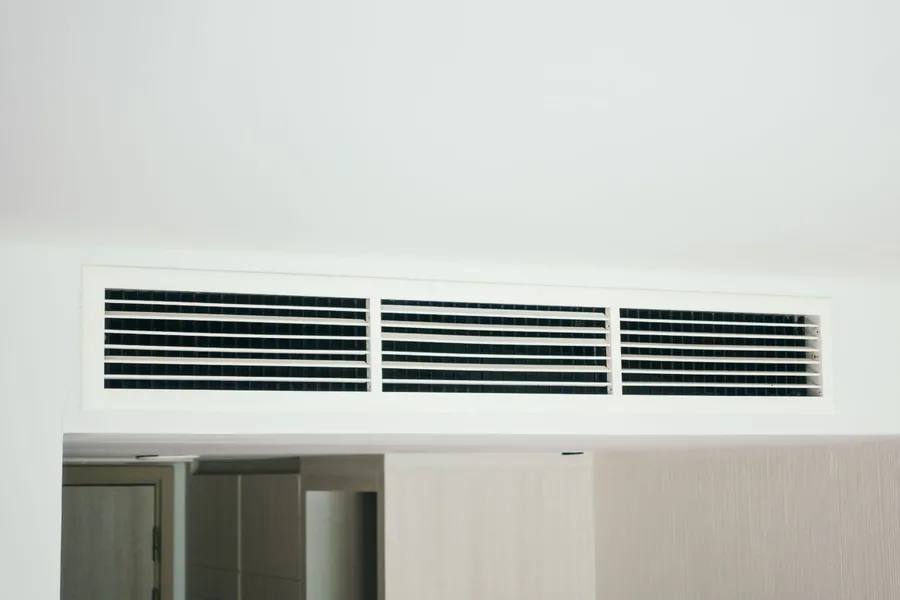
In French it's a PAC air-air réversible. The same outdoor unit and indoor split heat or cool, depending on the season. In cooling mode it works exactly like air conditioning. In heating mode it pulls warmth out of the outdoor air and moves it inside. Even at 5-6°C outside, there's enough warmth in the air for it to run efficiently.
A cooling-only unit (climatiseur non-réversible) cools a room but can't heat it.
A reversible unit usually costs 10-20% more than the same-size cooling-only model. Heating is needed here from November to March, so that extra is almost always worth paying.
Reversible heat pump vs cooling-only AC: which is more efficient?
Both carry a cooling efficiency rating, and premium brands score higher on it than mid-range ones. Only a reversible unit has a heating rating as well.
That heating side is where it pays. A good reversible split in the south of France gives about 3.5 to 4.5 kWh of heat for each kWh of electricity it uses. A gas boiler gets a little under 1 kWh of heat from each kWh of gas. So for most homes here, a heat pump is the cheapest way to heat.
Choose cooling-only and you'll need a separate heating system for winter.
How do installation and running costs compare: heat pump vs AC in France?
For a single-zone installation in a typical Cote d'Azur villa or apartment:
- Cooling-only split unit, fully installed: 1,800-3,000 EUR for a room up to 25 m²
- Reversible split unit, fully installed: 2,000-3,500 EUR for the same room
On a multi-zone system covering a larger property, the gap is about the same in proportion. The reversible option costs more upfront. Lower winter heating bills usually recover the difference within a few heating seasons.
If you already have efficient heating, such as a recent air-to-water heat pump that works well, paying for reversible may not make sense. A cooling-only unit can be the sensible way to add summer comfort.
Do reversible heat pumps get subsidies that AC units don't?
Yes, and this is where the two part ways.
A cooling-only unit gets nothing. It isn't energy renovation work, so there are no CEE credits and no reduced TVA. Expect 20% TVA on the equipment and 10% on the labour.
A reversible split (PAC air-air) has been excluded from MaPrimeRénov' as a standalone job since January 2025. It can still earn CEE credits of about 220-350 EUR on the Côte d'Azur, as long as the unit meets an efficiency threshold. CEE on an air-air unit doesn't need an RGE-certified installer, only a professional one.
Since 18 July 2026, a reversible unit can also be charged at 5.5% TVA in a main or second home over two years old. It has to meet an efficiency and connectivity spec. A unit that misses it pays 20% on the equipment and 10% on the labour, the same as cooling-only.
An air-to-water heat pump (PAC air-eau) is a different case. MaPrimeRénov' still covers it, but only in your principal residence, and CEE comes on top.
When a cooling-only AC unit beats a reversible system
Cooling-only is the right call in a few cases:
- You already have new, efficient central heating. With a recent PAC air-eau or gas boiler, reversible splits would duplicate the heating. Cooling-only gives summer comfort for less.
- Budget is tight and cooling comes first. Cooling-only is cheaper upfront. The catch is that the unit will never earn the CEE credits or reduced TVA a reversible one can.
- Your copropriété limits it. In some apartment buildings the syndic restricts which outdoor units you can fit. Where the building has communal heating, cooling-only may be all that's practical.
Outside these cases, reversible is the better buy for a home on the Cote d'Azur.
What to ask a heat pump or AC installer before you sign in France
Ask each contractor to price both options on the devis so you can compare them side by side. For the reversible unit, ask:
- Does this model meet the spec for 5.5% TVA, and which rate is on the devis?
- Does it meet the CEE efficiency threshold, and what CEE amount comes off the price?
- Can you show the heating and cooling ratings separately?
- Do your technicians hold F-gaz certification for the refrigerant work?
If a contractor proposes cooling-only without explaining why reversible doesn't suit your home, ask them why.
More on reversible splits, heat pump costs and grants
Sources
Official sources for reversible heat pump and AC grant rules
- Ministère de la Transition écologique: CEE standard operation sheets CEE on a reversible air-air split: the efficiency threshold, the professional-installer condition and the climate zone that sets the amount.
- Légifrance: arrêté of 13 July 2026 The efficiency and connectivity spec a reversible unit needs for 5.5% TVA from 18 July 2026.
- BOFiP: BOI-TVA-LIQ-30-20-95, reduced TVA on energy renovation work The 5.5% rate for energy renovation work in a home over two years old, whether it is your main or second home.
- Service-Public.fr: MaPrimeRénov' (F35083) The principal-residence rule and the heat pump types the grant still pays for.
Rules checked against these sources in September 2026. Cost ranges are our own estimates and are not drawn from these sources.