Guide
Solar panel installation costs in the south of France: what to expect
Knowing roughly what solar costs before you collect quotes makes it easier to judge what you're offered. The figures below come from home installations in the Alpes-Maritimes and Var, around Nice, Antibes, Cannes and Grasse. They're total installed prices: panels, inverter, mounting, electrical connection and commissioning, with TVA included.
Figures on this page are guidelines. Installation costs vary and subsidy rules change.
Confirm current amounts with your installer before signing.
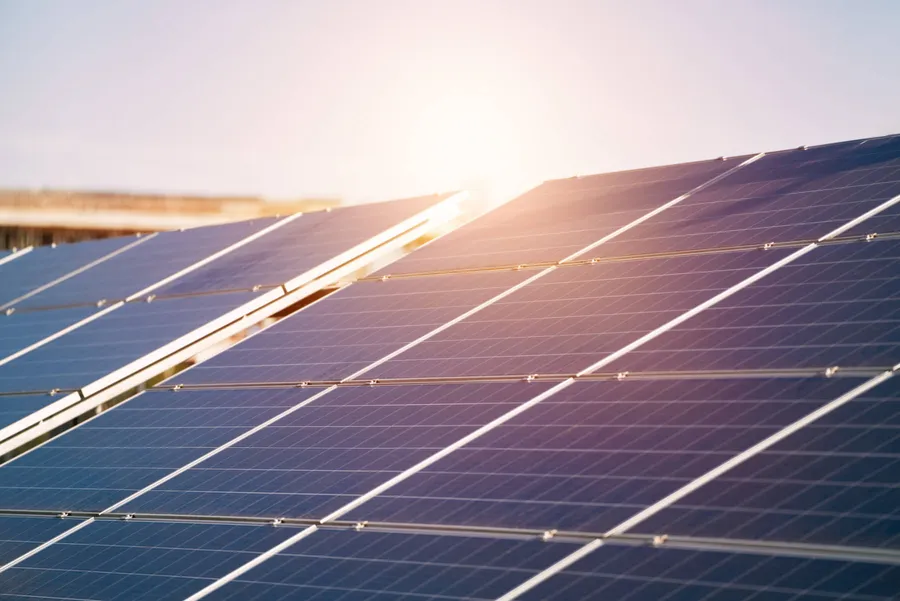
How much does a residential solar system cost in the south of France?
Installers size a system by its peak output in kilowatts-peak (kWp). Common sizes for houses on the Cote d'Azur and what they cost:
- 3 kWp (8-10 panels): 6,000-9,000 EUR. Suits a small to medium house or apartment with moderate electricity use. Generates around 4,000-4,500 kWh a year here.
- 6 kWp (16-18 panels): 10,000-15,000 EUR. A common size for a family house with a heat pump. Generates around 8,000-9,000 kWh a year.
- 9 kWp (24-26 panels): 16,000-22,000 EUR. For larger properties, or where you charge an electric car at home. Generates around 12,000-13,000 kWh a year.
- 12 kWp (32-36 panels): 22,000-30,000 EUR. For high-consumption villas, often with a battery and an electric car. Above 9 kWp the reduced TVA rate no longer applies (see below).
These are ranges, not averages. Roof access, shading and the panels you choose decide where in the range you land.
How much electricity will panels on a Cote d'Azur roof produce?
The Cote d'Azur is one of the sunniest parts of France, and a 6 kWp system here produces roughly 8,000 kWh a year. That covers around 60-70% of what a typical family house uses.
Those figures assume a south-facing roof with no real shading. Panels facing east and west produce about 15-25% less. The steeper the roof, the bigger the gap. They spread output more evenly across the day, though, which helps if you use power from morning to evening.
What pushes a solar quote up or down?
- Panels: premium panels cost more but produce more per square metre. That only matters if your roof space is tight, so ask whether a cheaper panel would fit the size you need.
- Inverter: a single central inverter is the cheapest option. Microinverters or optimisers add 1,500-3,000 EUR. They're worth it if part of the roof is shaded by a tree, chimney or neighbour, and they let you see what each panel produces. Ask the installer which setup they chose and why.
- Roof and access: flat roofs need mounting frames, which add cost. Old tiles that have to be lifted carefully add labour. Scaffolding for a high or steep roof adds 800-2,500 EUR.
- Your fuse board: some older houses need an upgraded board or extra protection before solar can be connected. That adds 500-1,500 EUR when needed.
- Grid paperwork: connecting to the grid means a declaration to Enedis, the grid operator. You may also need a CONSUEL safety certificate, which adds a modest cost. Your installer handles both.
- A battery: a 10 kWh battery adds 6,000-8,000 EUR when it goes in alongside the panels. As a later retrofit it's nearer 10,000 EUR, because the labour no longer overlaps. Watch the TVA, though. If the battery is on the same job as the panels, the whole invoice is taxed at 20%, panels included. Ask whether the battery can be quoted and installed as a separate job.
What happens to the solar power you don't use in France?
Most home systems in France run on autoconsommation with sale of the surplus (vente du surplus). You use what you generate, and EDF OA buys what you don't. The buy-back rate collapsed in June 2026 to 1.1 c EUR/kWh (before tax), on a 20-year contract. That's a small fraction of what you pay for grid electricity. So the sums only work if you use most of your own power.
This matters for a second home. If nobody's there to use the electricity, most of it goes to the grid for almost nothing. Size the system around when the house is occupied and what runs while you're away, such as a pool pump, and a battery changes that calculation.
Selling everything you generate (vente totale) is no longer offered for home-sized systems. Any quote that builds its payback on it, or on the old buy-back rate of about 4 cents, is out of date.
Which subsidies and tax breaks apply to solar panels in France?
Solar gets less help than heat pumps. Here's what applies now:
- Reduced TVA at 5.5%: since October 2025, systems up to 9 kWc can qualify. The panels must meet a low-carbon standard, which the installer should confirm on the devis, an energy management system must be included, and the house must be an existing home. Since 1 March 2026 the installer must also hold RGE QualiPV certification. Anything that misses a condition is taxed at 20%. The old 10% rate is gone. Check which rate is on the devis and ask the installer to confirm it.
- MaPrimeRénov': it doesn't cover solar panels that make electricity. Since 1 September 2026 it doesn't cover a standalone solar water heater either; that now qualifies only inside a full rénovation d'ampleur project. CEE subsidies are still available for a standalone solar water heater.
- Prime à l'autoconsommation: abolished. The arrêté of 1 June 2026 repealed it, and connection requests filed from 5 June 2026 get nothing. The last rate was 80 EUR/kWc up to 9 kWc, so a 3 kWp system would have received around 240 EUR. Treat any quote or article still promising it as out of date.
What to check when getting solar installation quotes in France
Get at least three devis. Check each one names:
- The panel brand, model and number of panels
- The inverter brand and model, and whether microinverters or optimisers are included
- The total size in kWp and the expected yearly output in kWh
- Mounting, scaffolding and any special access costs
- Who handles the Enedis connection
- The TVA rate, and the installer's RGE QualiPV certificate if it's 5.5%
- Whether the EDF OA surplus contract application is included
A quote that shows only a total price can't be compared with anything. Ask all three installers for itemised quotes before you decide.
More on solar panels, batteries and permits
Sources
Official sources for solar TVA, buy-back and subsidy rules
- BOFiP: BOI-TVA-LIQ-30-20-97, TVA on solar electricity equipment The 5.5% rate up to 9 kWc and its conditions, and why a battery on the same job takes the whole invoice to 20%.
- Légifrance: arrêté of 1 June 2026 The end of the prime à l'autoconsommation and the 1.1 c EUR/kWh surplus buy-back rate.
- Légifrance: décret n° 2026-822 of 25 August 2026 MaPrimeRénov' never covered solar panels, and from 1 September 2026 it stops funding solar water heaters as a single measure too.
Rules checked against these sources in September 2026. Cost ranges are our own estimates and are not drawn from these sources.