Roof and loft insulation on the Cote d'Azur
An uninsulated tuile canal roof drives more heat loss in winter, and more heat gain in summer, than any other single part of an older Riviera house. Closing it off is one of the cheapest renovation jobs there is, and the grant landscape behind it changed more recently than almost anything else on this hub. This page sets out what roof insulation costs, what still pays for it, and what a proper devis should show.
Looking for an English-speaking installer on the Côte d'Azur? Get quotes →
Why the roof comes first
How much heat does an uninsulated tuile canal roof lose?
Terracotta canal tiles laid straight onto rafters, with nothing between the tiles and the bedroom ceiling below, is standard construction across the older housing stock here. ADEME's breakdown for a poorly insulated house attributes 25 to 30% of heat loss to the roof, more than any other single element: more than the walls, more than the windows, more than draughts. Heat rises, and an uninsulated roof gives it a direct exit.
That's the winter story. It runs in reverse in summer. The same uninsulated tiles absorb the afternoon sun and keep radiating that heat down into the rooms below for hours after sunset, which is why an upstairs bedroom under an unlined roof is often the hottest room in the house in August, long after the sun has gone down over the bay.
Closing that gap is also, per euro spent, the cheapest fix on the list. Loft insulation runs 20 to 60 EUR per m² installed, well below what wall insulation or new windows cost, and a straightforward blown-wool job in an unused loft takes a contractor half a day to a day for a typical house.
Two different jobs
Combles perdus or rampants: which insulation does a Riviera house need?
The right method turns entirely on what's happening in the roof space; the roof covering above it barely factors in. If the loft is empty storage space nobody stands in, that's combles perdus: a contractor blows loose mineral wool or cellulose across the floor of the loft, on top of the ceiling of the room below. It's fast, disruptive to almost nothing in the house, and it's the cheaper of the two jobs. CEE requires the new layer to reach a thermal resistance of R 7 or higher.
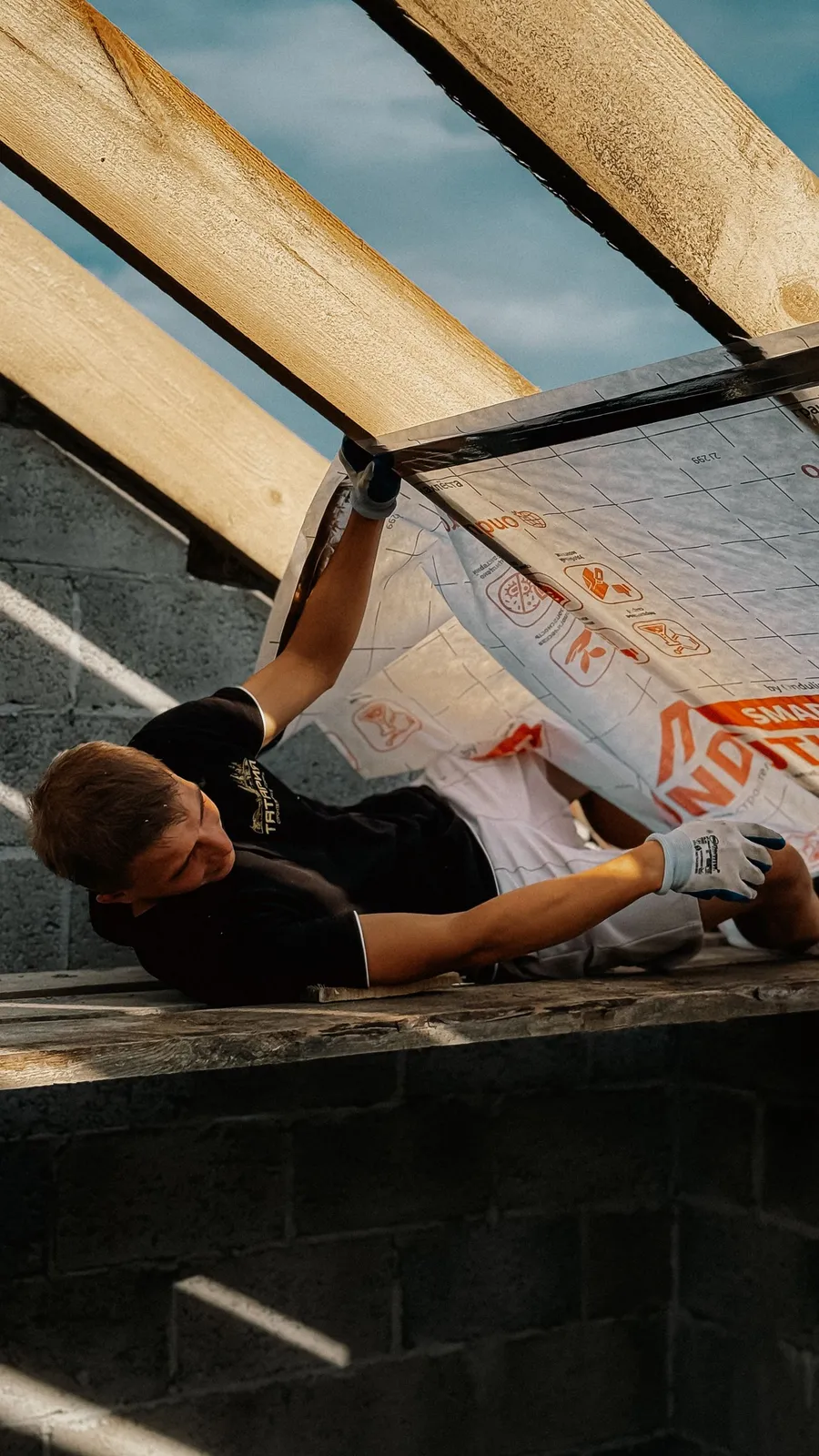
If the roof space is converted into a bedroom, a bureau or a guest suite, or you're planning to convert it, the insulation has to go against the underside of the roof slope itself: that's rampants, fitted between and under the rafters, usually with rigid boards or mineral wool batts and a vapour barrier. It costs more because it's a carpentry job as much as an insulation one, and it often means taking a ceiling down and putting it back up. CEE's bar here is R 6 or higher.
Some houses need both: combles perdus over the unused end of the loft, rampants over the converted part. A contractor who quotes without asking which parts of your roof space are lived in and which aren't hasn't looked closely enough at the job.
Get matched with vetted English-speaking installers in your area.
Get quotesWhat to budget
What does roof insulation cost per m² in the Alpes-Maritimes?
Loft insulation runs 20 to 60 EUR per m² installed. Where you land in that range depends mostly on the method and the material; which town you're in barely moves the needle.
Figures are guidelines. Prices vary by contractor and material.
Confirm the current figure with your installer before signing.
On a 100 m² loft, that's roughly 2,000 to 6,000 EUR before any subsidy, depending on whether it's a simple combles perdus job or a full rampants conversion. Energy renovation work like this is taxed at 5.5% TVA, not the 10% rate that applies to general repair work, as long as the dwelling is over two years old; your installer applies the rate on the devis, and the RGE requirement sits on the grants, never on the tax rate itself.
If the roof covering is being re-laid at the same time as the insulation goes in, ask the installer to split the devis by line. The insulation element, boards, membrane and fitting labour, is 5.5%. Stripping and re-laying the tiles stays at 10% unless it's indispensable to the insulation work. A single blended line at 10% for the whole job costs you the difference.
Financial aid
What does CEE pay for roof insulation in zone H3?
MaPrimeRénov' par geste stopped funding roof insulation, and wall insulation, windows and several other single measures with it, for any application filed from 1 September 2026. That change comes from Décret n° 2026-822 du 25 août 2026. Roof insulation now only qualifies for MaPrimeRénov' inside a full rénovation d'ampleur, which requires an E, F or G rating beforehand, at least two DPE classes gained, a Mon Accompagnateur Rénov' advisor, and a principal residence. Second homes never qualify for MaPrimeRénov', with or without this change. Most English-language guidance on this hasn't caught up with the decree yet, so treat any page quoting a par geste amount for roof insulation as out of date.
What's still open, and untouched by the September recentrage, is the standalone CEE fiche, BAR-EN-101. There's no residence test on it: a second home earns exactly what a primary residence would. The catch for this coast is climate zoning: the Alpes-Maritimes sits in zone H3, and for a heating-driven measure like roof insulation, H3 is the lowest of the three bands. The fiche pays around 920 kWh cumac per m² here, against 1,400 in zone H2 and 1,700 in zone H1. National figures you'll see quoted online will overstate what a Riviera property earns.
Worked through: 100 m² of loft insulation in zone H3 generates roughly 92,000 kWh cumac. At a market certificate price of 7 to 9 EUR per MWh cumac in the classique band (September 2026), that's somewhere around 640 to 830 EUR, deducted from the job by the installer before you ever see a bill. It's a real discount on a job that costs 2,000 to 6,000 EUR, though it's smaller than the grant this coast was getting before September. The Éco-PTZ is worth pairing with it if this is your main home: a zero-interest loan up to 15,000 EUR for a single measure other than windows, running to 31 December 2027, covering whatever CEE doesn't. It is principal-residence only, so a holiday home cannot use it.
The Riviera case
Does roof insulation make a house hotter in summer?
No, and this is where insulation on this coast earns its keep differently than it does in a heating climate. Most French guidance on roof insulation is written for houses in Lille or Strasbourg, where the job is entirely about keeping January warmth in. Here, the summer case matters as much or more: an uninsulated tuile canal roof under a Mediterranean sun is a heat-gain problem, and the question a reader cares about in July is whether the top floor is liveable at night.
Insulation slows heat flow in both directions. The same layer of mineral wool that keeps warmth inside in January keeps the sun's heat from working its way down into the rooms below in August. That's real, and it's measurable: the DPE now carries a summer-comfort indicator alongside the main energy grade for exactly this reason.
It's not the whole answer on its own, though. Insulation slows heat gain; it doesn't remove heat that's already built up inside the house over the course of a hot day. A well-insulated but sealed, poorly ventilated attic space can still sit warm well into the evening. Ventilation matters here as much as the insulation itself: a system that can flush the hottest air out of the house once the outside temperature drops in the evening makes a measurable difference on top of what insulation alone achieves. See our central ventilation page for how the two work together. Exterior shading, shutters closed before the sun hits the glass, matters too, and no amount of roof insulation fixes a west-facing window left uncovered all afternoon.
Insulate the roof and expect a real improvement in summer comfort, without expecting it to solve a ventilation problem or a shading problem it was never designed to fix.
Before you sign
What should a roof insulation devis show?
A proper devis for roof insulation spells out the specifics instead of giving a single line item with a total. It should state whether the job is combles perdus or rampants, the exact material (mineral wool, cellulose or rigid polyurethane board) and its declared thermal resistance, and confirm that resistance meets R 7 for a loft floor or R 6 for a roof slope. If the R-value isn't stated in writing, the job may not qualify for CEE even if the installer says it will.
It should also show the CEE amount as its own separate deduction that you can verify against the total, name the installer's RGE certification and confirm it covers insulation specifically, and note whether the job involves stripping old insulation first. If you're topping up an existing layer instead of starting from bare rafters, ask the installer to confirm in writing that the new material alone reaches the required R-value: CEE counts only the new insulation, never the combined total with whatever's already up there.
Finally, if any part of the job touches the outside of the roof, changing tile colour or type, or raising the roof height for a sarking layer, a déclaration préalable is needed before work starts, and inside a protected perimeter the ABF's opinion on tile type and colour is binding. Ask your installer whether the job as scoped needs one, and check with the mairie yourself instead of relying on the contractor's assumption.
French terms
Key terms to know
Key French terms for this service
Questions
Frequently asked questions about roof insulation on the Cote d'Azur
If your question isn't here, send it with your request and we'll answer it directly.
Not as a standalone job. Since 1 September 2026 it's only fundable inside a full rénovation d'ampleur, which most second-home owners can't access anyway. See our MaPrimeRénov' explainer for what that route requires. For a straightforward loft job, CEE, the 5.5% TVA rate and the Éco-PTZ are the routes that are open.
Less than the national figures you'll find online, because the Alpes-Maritimes sits in climate zone H3, the lowest band for heating-driven CEE fiches. BAR-EN-101 pays around 920 kWh cumac per m² here, against 1,700 in zone H1. For a typical 100 m² loft that works out to roughly 92,000 kWh cumac, worth somewhere around 640 to 830 EUR at current classique-band certificate prices of 7 to 9 EUR per MWh cumac. A modest-income household can do better, because the précarité band runs higher. That's before your installer's handling and margin, and certificate prices move, so treat it as a rough figure and ask your installer to show the CEE line separately on the devis, as its own deduction and not folded into the total.
Combles perdus means an unconverted loft you don't stand in, insulated by blowing loose mineral wool or cellulose across the floor. It's fast, cheap, and CEE requires a thermal resistance of R 7 or higher. Rampants means the underside of the roof slope itself, relevant when the roof space is converted into a room or you plan to convert it, insulated with rigid boards or batts fitted between and under the rafters. CEE requires R 6 or higher there. Rampants work costs more per m² because it involves more carpentry and often means taking down and refitting a ceiling, but it's the only option if the space under the tiles is going to be lived in.
Yes, but only if you also sort out ventilation. Insulation slows heat flow in both directions: it keeps warmth in during winter and keeps the sun's heat out during summer. An uninsulated tuile canal roof in full August sun turns a loft into an oven and keeps radiating that heat into the rooms below well into the evening. Insulating the roof cuts that gain sharply. What it won't fix on its own is a house that has no way to flush out the hot air that's already inside, or one with no shading on west-facing glass. Pair roof insulation with proper ventilation, see our central ventilation page, and the summer comfort improvement holds up fully.
Only the new material counts toward the R 7 or R 6 threshold. What's already up there is ignored. If your loft has old, thin or degraded insulation and you add a layer on top, an RGE assessor calculates the resistance of the new layer alone. If that layer by itself doesn't reach R 7, the job doesn't qualify for CEE, even if the total stack technically performs well. In practice this means a real top-up job often needs the old material stripped out and replaced entirely, so ask your installer to confirm the R-value of the new material specifically before you sign the devis.