Guide
Preparing your Côte d'Azur second home for a long absence
Closing up a house in the south of France for three to six months is different from doing the same in northern Europe. The climate feels forgiving, and the common mistakes reflect that: owners switch off everything and leave, assuming the mild winters will protect the property. They often don't. Mold from a sealed-up coastal property in winter is one of the most common things we hear about from second-home owners returning in spring. Burst pipes are rarer but more expensive. Both are preventable with a straightforward departure routine.
This guide covers the main risks, what to do about each, and how to monitor the property remotely so problems get caught early.
Why does an unoccupied Côte d'Azur property risk mold damage?
The Mediterranean coast has high relative humidity, particularly from November to February, and especially in properties within a few hundred metres of the sea. When a property is sealed and unventilated, moisture accumulates. Within two to three months, mold appears, typically first on north-facing walls, in wardrobes, and in bathrooms. In a property with no cross-ventilation at all, it can happen faster.
The fix is not complicated: don't seal the property completely. If you have a VMC (mechanical ventilation system), leave it running. It doesn't use much electricity, it moves air through the building continuously, and it makes a significant difference to moisture levels. Switching the VMC off because you're worried about electricity costs is a false economy. The cost of professional mold remediation in a badly affected property runs to thousands of euros.
If the property has a single-flow VMC (the older type, which extracts air from bathrooms and kitchen but doesn't supply fresh air), leave that running too. If there's no VMC at all, leave trickle vents cracked open in at least two rooms on opposite sides of the building to allow some air movement. A property manager or neighbor checking in every two to three weeks can also briefly ventilate each room, which matters more in a fully sealed property.
If your property has recurring mold problems despite reasonable precautions, that's usually a sign the VMC is undersized, blocked, or failing. It's worth having it serviced before you leave. See our ventilation service page for what this involves.
What temperature settings prevent frost damage in an empty Côte d'Azur property?
The Côte d'Azur rarely sees hard frost at sea level. Nice, Cannes, and Antibes might see two or three nights below zero in a typical January, and those are brief. Inland is a different matter. Grasse regularly sees -3°C to -5°C in January and February. Vence, Valbonne, and the Var countryside can dip lower. Properties at altitude or set back from the coast face a genuine frost risk to unprotected pipework.
The rule of thumb: coastal properties should maintain a minimum of 7°C inside; inland properties should target 10°C. Modern heat pumps, gas boilers, and electric heating systems all have a frost protection mode that keeps the property at a set minimum. Activate it before you leave. Do not turn the heating off completely.
If the property runs on electric radiators without any programmable frost protection, buy a few plug-in thermostatic switches (available from any French hardware store for around 15-25 EUR each) and set them to activate at 7°C. They're not elegant, but they prevent the problem.
Pipework that runs through unheated spaces, particularly in older villas with pipes in a cellar or garage, is the most vulnerable. Pipe lagging (isolation de tuyaux) from a builder's merchant significantly reduces frost risk for minimal cost. If you have a pool heating circuit, that needs separate attention.
Should you isolate the water supply when leaving a Côte d'Azur property empty?
For absences up to about three months, turning off the main stopcock (vanne d'arrêt principale) inside the property is enough. This isolates the internal pipework from mains pressure. Open a tap briefly after closing the stopcock to release pressure from the internal circuit, then leave the tap closed. This protects against a burst from a faulty joint or fitting while you're away.
For longer absences, or in inland properties where frost risk is meaningful, draining the system is more thorough. This means closing the stopcock, then opening the lowest points (usually the drain valve on the boiler and the drain taps at the base of any radiators) to remove water from the circuit. This is worth doing for any system with exposed pipework in unheated spaces.
A few details that are easy to miss:
- Washing machines and dishwashers have water in their door seals and pumps. Run them through a short empty cycle just before you leave to clear standing water.
- If you have a water softener (adoucisseur d'eau), check the salt level before you go. The system may stop working effectively if it runs dry, which leads to scale build-up in the hot water circuit over a long absence.
- The toilet cistern will slowly evaporate. It won't cause damage, but flush it when you return before making any assumptions about what's in the tank.
- Pool circuits: leave winterization of the pool to a pool professional. Attempting to drain and protect a pool system without experience frequently causes damage to the lining or equipment.
What remote monitoring is worth adding to a Côte d'Azur second home?
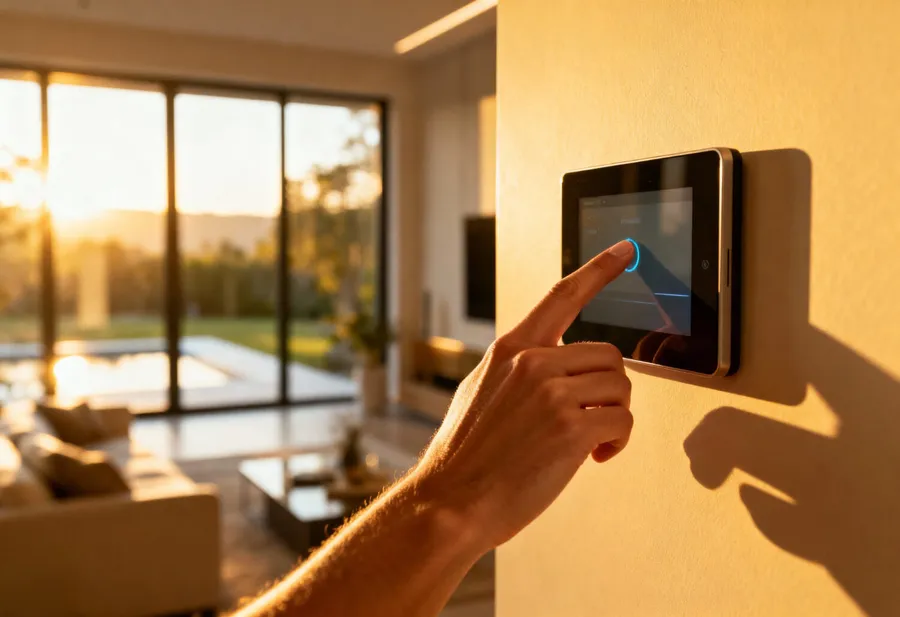
A connected thermostat is the most useful single addition for a second home. Systems like Tado, Netatmo, or Atlantic Cozytouch let you see the current temperature in the property from your phone and set alerts if it drops below a threshold. If the heating system fails at Christmas, you know within hours rather than returning in April to a burst pipe.
Beyond the thermostat:
- Water leak detectors: small sensors that sit on the floor under the boiler, washing machine, and dishwasher. They sound an alarm and (with a connected model) send a push notification if water is detected. They cost 30-80 EUR per unit and can save significant remediation costs. A leak from a boiler connection that runs for two months into an unventilated space is an expensive problem.
- Electrical trip alert: some smart consumer units or whole-home monitoring systems will alert you if a circuit breaker has tripped. This matters if a pool pump, water heater, or heating circuit loses power without you knowing.
- Indoor camera: useful for security, and also for a visual check of obvious things like water on the floor or heating indicator lights. A single camera in the main living area is enough for most properties. Keep in mind that indoor cameras in a property that's let out must comply with French privacy rules.
- Smart plugs with energy monitoring: let you see whether appliances are drawing power normally. Unusual consumption patterns sometimes indicate a problem before it becomes a failure.
The limiting factor is internet connectivity. All of this assumes the property has a broadband connection that stays active while you're away. Check whether your operator's contract continues to bill the property during absence and, if the line is interrupted for any reason, whether the router automatically reconnects. A router with a 4G SIM as a backup connection is a reasonable precaution for properties where the wired line is unreliable.
Which electricity and gas circuits should you leave on in an empty property?
There's a difference between managing the electricity bill and creating a risk by switching things off that should stay on. The heating and VMC should stay active, as above. Everything else is a judgment call.
Switch off before leaving:
- TV, audio equipment, and anything with a standby draw that serves no purpose in an empty property
- Coffee machines, kettles, toasters
- Washing machine and dishwasher (at the socket, not just the panel button)
- Desktop computers and monitors
- Decorative lighting on timers (unless you're using it as a security measure)
Leave running or on standby:
- The router and any connected monitoring equipment
- The refrigerator, unless you plan to empty and defrost it
- The heating system in frost-protection mode
- The VMC
- The alarm system and any security lighting
For gas: if the property uses gas only for cooking and you've shut the water to the boiler, closing the gas isolation valve at the meter is a reasonable precaution. If the gas boiler is your frost-protection heating source, leave the gas on.
Second-home insurance: read the policy before you leave
French property insurance (assurance habitation) must remain active year-round on all properties, occupied or not. The cover doesn't end because you're not there. But many policies contain clauses about unoccupied properties that are worth checking.
Common clauses to look for:
- Some policies require notification if the property will be unoccupied for more than 30 or 60 consecutive days. Failing to notify can affect claims for damage that occurs during that period.
- Dégât des eaux (water damage) from a slow, undetected leak may be subject to coverage limits or conditions in a long-absence scenario. Check whether the policy requires the water supply to be isolated.
- Frost damage to pipework: some policies exclude this if the heating was switched off. Keep proof that your frost-protection mode was active.
A property manager or neighbor checking the property every two to three weeks satisfies most "regularly visited" policy clauses and is worth arranging regardless of the insurance question.
Property managers: when it's worth the cost
A local property manager typically charges 80-200 EUR per month for a weekly or fortnightly visit, a visual check, and a brief report. For a longer absence, this is worth considering for the insurance compliance alone, quite apart from the peace of mind. A good property manager will also notice if the heating has failed, if there's a leak, or if the VMC has stopped working.
Beyond checks, a property manager can take deliveries, deal with tradespeople, respond to emergencies, and notify you before a problem becomes expensive. If your property is in a copropriété, they can also attend syndic meetings on your behalf. For owners who live more than a few hours' drive away, the cost is typically lower than a single emergency trip to deal with a problem that wasn't caught early.
Pre-departure checklist
- Activate frost-protection mode on heating system; set minimum temperature (7°C coastal, 10°C inland)
- Confirm VMC is running and not blocked at grilles or filters
- Turn off water at the main stopcock; open a tap briefly to release pressure
- Drain system if frost risk is meaningful or absence exceeds three months
- Run washing machine and dishwasher empty before leaving
- Check water softener salt level
- Switch off non-essential appliances at the socket
- Close gas isolation valve if no gas-powered frost protection is in use
- Confirm smart thermostat is connected, showing correct temperature, and alerts are active
- Place water leak detectors under boiler, washing machine, dishwasher
- Check insurance policy: notify insurer if required
- Brief property manager or trusted neighbor; leave emergency contact numbers
- Confirm broadband connection will remain active