Guide
Energy guide for second homes on the Cote d'Azur
The Cote d'Azur has one of the highest concentrations of second homes in France, with a large share owned by British, German, Belgian, Swiss, and American buyers. Managing energy work on a property you visit a few weeks a year is different from managing it on your primary residence. The decisions around heating, cooling, solar, and subsidies all look slightly different when the property spends most of its time unoccupied. This guide covers the specific questions that come up most often for second-home owners in the Alpes-Maritimes and Var.
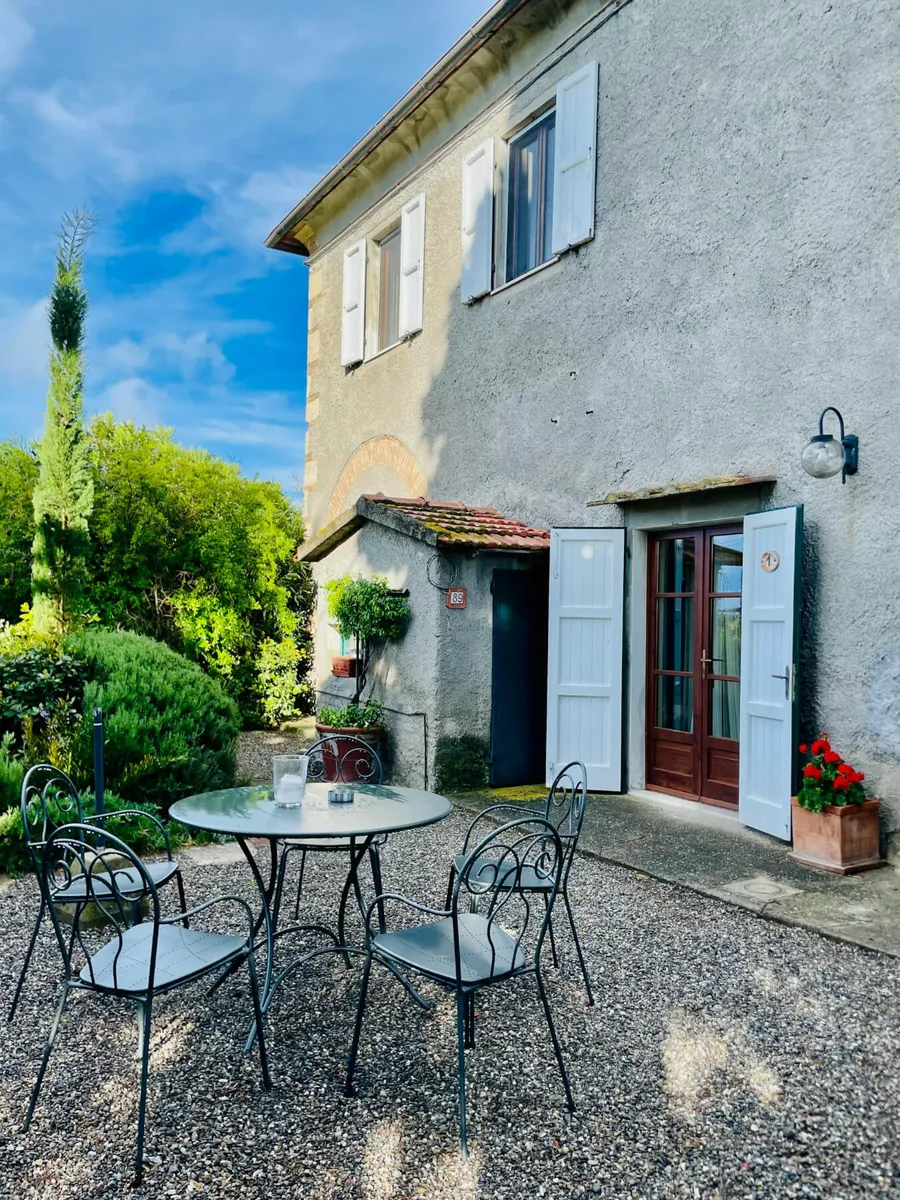
What makes energy decisions different for a second home?
Three things distinguish a second home from a primary residence when it comes to energy work:
- Occupancy pattern: a property occupied 4-8 weeks a year has very different energy consumption than one lived in year-round. Equipment sized for full-time occupation is usually oversized and less efficient for part-time use.
- Remote management: when you are not there, you cannot respond to problems. Systems that can be monitored and controlled remotely, or that operate reliably without intervention, matter more than they would for a primary residence.
- Subsidy access: some French energy grants treat primary and secondary residences differently. Knowing which schemes apply and which do not prevents planning a project around a subsidy you cannot actually access.
Do second-home owners qualify for MaPrimeRenov'?
No. MaPrimeRenov' requires the property to be the owner's principal residence (résidence principale). Secondary homes are not eligible, regardless of the type of work, the property's DPE rating, or the owner's income or nationality.
The schemes that do apply to secondary residences:
- CEE grants (Certificats d'Economies d'Energie) — available with no additional restrictions. Arranged through your installer and appear as a deduction on the quote. No French tax residency required. See the CEE grants guide for a full explanation.
- TVA réduite — the reduced VAT rate (5.5% or 10% depending on work type) applies to all qualifying residential properties over 2 years old, primary or secondary.
The Éco-PTZ zero-interest loan is not on that list: like MaPrimeRénov', it requires the property to be your principal residence, so it is not available for a second home. See the Éco-PTZ glossary entry for details.
What heating and cooling system suits a part-time home on the Côte d'Azur?
Reversible air conditioning (pompe a chaleur air-air) is the most practical choice for a second home on the Cote d'Azur. The reasons:
- It handles both summer cooling and winter heating in one system
- Modern units can be controlled remotely by smartphone, so you can pre-condition the property before arrival without leaving the system running all week
- The mild winters here mean a reversible AC unit covers most heating needs without a secondary system
- Installation is less disruptive than underfloor heating or a full hydronic system, which matters when you are managing the work from a distance
Gas boilers and oil heating are not recommended for properties with long unoccupied periods. Maintenance requirements, freeze risk (gas condensate traps can freeze in exceptional cold), and the logistics of managing a service contract remotely all add complexity. If an older property already has a gas system, replacing it with a reversible heat pump during a renovation is worth considering.
For second homes that are let out during summer, a multi-split system with cooling in the main living areas and at least one bedroom is the minimum expected by most short-term rental guests. Check what neighbouring comparable lets offer before deciding on system size.
Does solar make sense for a second home?
Solar works best when someone is present to consume the generation. For a property occupied 4-8 weeks a year, most of the solar generation will be exported to the grid at the lower feed-in tariff rate rather than consumed on-site. The financial case is weaker than for a primary residence.
That said, solar can still be worthwhile for second homes in specific circumstances:
- If the property is let out for a significant portion of the year (12+ weeks), self-consumption during those periods improves the economics
- If a battery is included, the system can shift generation into the evening when more consumption typically occurs
- If the property has a pool, the pump is a consistent load even when unoccupied, and solar can reduce that running cost meaningfully
- If the main motivation is capital improvement rather than short-term payback, solar is an increasingly standard feature of quality properties on the Cote d'Azur
For detailed figures on solar installation costs and the applicable subsidies, see the solar panel costs guide.
What about EV charging at a second property?
A home EV charger is a worthwhile addition if you drive an EV when visiting the property, or if you let it out to guests who may arrive by EV. A 7 kW wallbox is the standard installation and costs 1,200-1,800 EUR, rising towards 2,500 EUR when the parking area sits a long way from the consumer unit.
The main subsidy for a home EV charger at a standalone house is TVA at 5.5%, which applies when an IRVE-certified electrician supplies and installs the charger on a single invoice. The Advenir programme (which is CEE-funded and administered by AVERE) currently focuses on collective residential buildings and shared parking, not individual houses. If the second home is an apartment in a copropriete, Advenir may apply for a charger in the shared parking area. For a property used only part-time, a standard 7 kW charger is usually sufficient; there is rarely a case for 22 kW capacity at a second home unless the property is let out with EV charging as a feature and fast turnover between guests is needed.
One practical consideration for a second home: if the property will be unoccupied for long periods with an EV charger on a dedicated circuit, check with your electrician whether any smart switching or isolation is appropriate, and confirm the charger does not have any standby draw that might affect your electricity bill when no car is connected.
What permits does a second-home owner need for energy work?
The permit rules are the same for second homes as for primary residences. A few situations that arise more commonly for second-home owners:
- Outdoor AC units: visible outdoor units on a facade typically require a declaration prealable de travaux, submitted to the local mairie. Processing takes 1-2 months. Your installer usually handles this, but confirm it is included in the service.
- Solar panels: panels visible from the street require a declaration prealable. In protected zones (ZPPAUP, secteur sauvegarde, proximity to a monument historique) rules are stricter and a full permit may be needed. Many parts of the Cote d'Azur fall within such zones, so check before signing a solar contract.
- Copropriete properties: apartments require syndic approval before installing an outdoor unit, EV charger, or solar panels. The timing for copropriete approvals depends on when the next general assembly is scheduled. Allow for this in your project timeline.
- ABF review: if the property is within 500 metres of a classified monument, the Architecte des Batiments de France must review certain exterior changes. Your mairie can confirm whether this applies.
The full guide to permits for energy work in France is at what permits and approvals do you need.
How do you manage contractors on the Côte d'Azur as a non-resident?
Managing energy work on a property you visit infrequently requires more preparation than the same job on your main home. A few things that make it easier:
- Get all quotes, decisions, and sign-offs done in writing, before your visit, so that work can proceed without extended back-and-forth when you arrive
- Ask contractors explicitly whether they have experience with non-resident clients and what their process is for remote communication and progress updates
- For any project involving subsidies, clarify who is responsible for the application, documentation, and any follow-up before signing the devis
- The Cote d'Azur has a well-established community of English-speaking contractors and bilingual project managers. Asking specifically for experience with English-speaking clients is a reasonable due diligence question, not an unusual one
For simple installations (a single-split AC unit, a wallbox), it is entirely practical to have the work done between visits, with a trusted contact present if needed. For more complex projects (a heat pump system, solar installation, or a renovation combining several measures), having someone on the ground to oversee progress is worth the cost.
Related pages
- MaPrimeRenov' explained: who qualifies and how to claim
- CEE grants explained
- Solar panel installation costs in the south of France
- AC installation costs on the Cote d'Azur
- Home EV charger installation costs in France
- What permits and approvals do you need for home energy work in France
- MaPrimeRenov': quick-reference glossary entry
- CEE: Certificats d'Economies d'Energie
- Preparing your Côte d'Azur second home for a long absence