Guide
Installing AC in a French copropriété: the complete approval guide
Installing a split AC unit in a French apartment building is straightforward once you understand the rules. The approval process exists because the outdoor unit (groupe extérieur) must be fixed to or near the exterior of the building, which is common property (parties communes). You can't attach anything to a shared facade or roof terrace without permission, regardless of how unobtrusive the unit looks. This guide explains the process step by step: what approvals you need, how the vote works, what technical information to prepare, and what to do if the building's rules appear to block you.
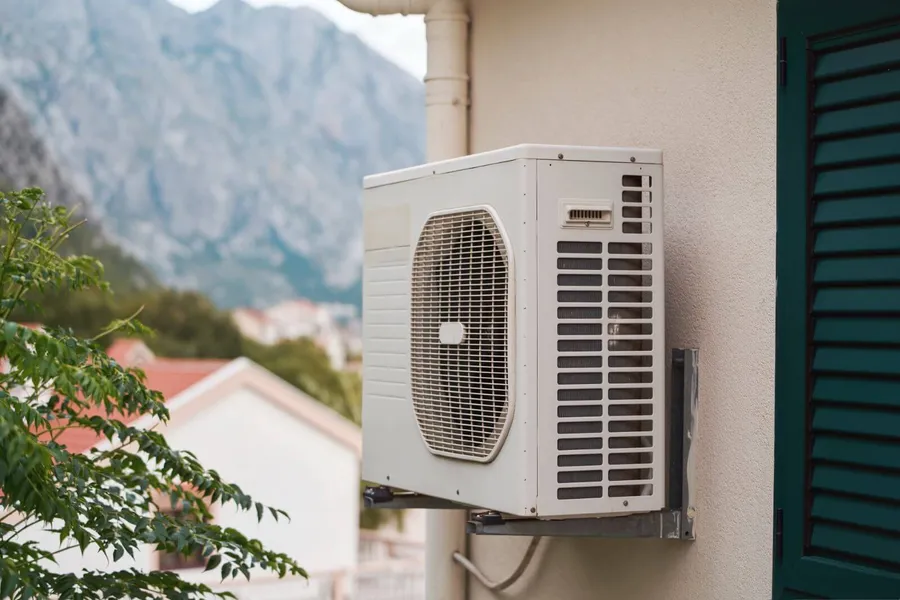
Do you always need syndic approval for AC in a French apartment?
Yes, if the outdoor unit will be fixed to any part of the building structure that constitutes parties communes (common property). This includes the exterior facade, the roof, a shared terrace, or any shared wall. The only exception is if you have an exclusive private terrace or garden that is entirely within your lot (lot privatif), the unit will sit within that space without attaching to any shared structure, and the condensate drainage doesn't affect any common area. That scenario is rare in practice.
In most apartments, the outdoor unit goes on a wall bracket on the exterior facade, which requires authorisation. Some copropriétés have existing règlement de copropriété clauses that either permit or prohibit AC units outright. Check yours before doing anything else; the syndic or a notaire can provide a copy.
What does French law say about the right to install AC?
The loi du 10 juillet 1965 (the copropriété law) and its implementing decree govern what owners can and cannot do with common property. Article 25 of the 1965 law applies to works that affect the destination of common areas or the rights of other co-owners. Installing an AC outdoor unit on the facade falls under this article, meaning it requires a majority vote at the AGM (Assemblée Générale): more than half of all co-owners must vote in favour, based on their tantièmes (ownership shares), not just those present at the meeting.
Note: the 2019 loi ELAN introduced a specific right for co-owners to install EV charging points in shared parking areas (the "droit à la prise"), but no equivalent automatic right exists for AC. You need the vote.
How does the copropriété AGM vote on an AC installation?
The process runs as follows:
- Contact the syndic in writing: request that your installation project be added to the agenda of the next AGM. Do this at least 6-8 weeks before the meeting; syndics typically have a deadline for agenda items, and you must allow time for the technical documentation to be circulated to all co-owners before the meeting.
- Prepare the technical dossier: the syndic (and by extension the other co-owners voting) will want to know what they're approving. See the checklist below for what to include.
- The vote: the AGM votes on your request. The vote requires an absolute majority under Article 25: more than 50% of all tantièmes, not just those present. If it falls short of this threshold but reaches at least one-third of all tantièmes, a second vote by simple majority (of those present or represented) can be called immediately at the same meeting.
- The minutes: if approved, the decision appears in the procès-verbal (meeting minutes). Keep a certified copy. You'll need it if you ever sell the apartment, and the installer may ask for it before starting work.
If the AGM refuses permission, you have limited recourse short of applying to a court (tribunal judiciaire) arguing that the refusal was abusive or contrary to the law. In practice, a well-prepared application with clear technical documentation rarely fails if the unit is placed discreetly and the noise and aesthetic concerns are addressed upfront.
What is the déclaration préalable and do you need it?
Separately from the syndic process, installing an AC outdoor unit on the exterior of a building usually requires a déclaration préalable de travaux filed with the mairie. This is a planning notification, not a full permission. The mairie has one month to respond (two months in ABF conservation zones). If no response arrives within that period, the declaration is considered accepted.
Your installer should handle the declaration as part of the installation process. If they don't mention it, ask directly. In ABF zones (near listed buildings or in classified urban areas), the Architecte des Bâtiments de France reviews the declaration and may impose conditions on unit placement or require screening.
What technical details does the syndic need about your AC unit?
A well-prepared dossier for the co-owners removes the obvious objections and makes approval significantly more likely. Prepare the following:
- Proposed location of the outdoor unit: a photograph or annotated floor plan showing exactly where the unit will be placed, the bracket type, and what it will look like from the street or courtyard. If you can show it won't be visible from the main facades, say so clearly.
- Unit dimensions: the physical size of the outdoor unit (height × width × depth in centimetres). A compact unit is more likely to get approval than a large commercial-style condenser.
- Noise level: the acoustic output of the outdoor unit in dB(A) at one metre, taken from the manufacturer's technical data sheet. Most co-owners and syndics expect this figure. Modern residential split AC units are typically 45-55 dB(A) at one metre from the unit in normal operation. Some copropriétés specify a maximum: 45 dB(A) is a common threshold in building rules. If the unit you want is louder than the building's threshold, choose a quieter model.
- Condensate drainage: explain how the condensate (water produced during cooling) will be drained. It cannot drip onto a lower floor balcony or into any common drainage channel without proper pipework. A clean drainage solution is often required as a condition.
- Contractor details: the installer's name, qualifications (RGE if relevant, garantie décennale insurance reference), and the devis reference.
- Declaration préalable: if already filed with the mairie, include a copy. If not yet filed, note that it will be filed before work starts.
What if the règlement de copropriété prohibits AC?
Some older règlements de copropriété were written before split AC units were common and contain blanket prohibitions on "appareils de climatisation" or similar. French case law has evolved here: courts have increasingly found that prohibitions on AC must be clearly and specifically worded, and that generic clauses about maintaining the building's appearance do not automatically prohibit a discreet outdoor unit installed in compliance with all other requirements.
If your règlement has such a clause, do not simply ignore it. Consult a notaire or lawyer (avocat) who can advise whether the clause is enforceable as written. In many cases, a properly worded request to the AGM to amend the règlement, combined with the specific installation proposal, — can be addressed in one meeting.
What happens after the AGM approves your AC installation?
Once you have the AGM approval and the déclaration préalable has passed (or been accepted by default), the installation can proceed. The work itself is typically completed in one day for a standard single-room split unit. If you're fitting a multi-split system serving several rooms, the installation takes longer and involves more pipework through the building fabric, which may require additional documentation.
After installation, the syndic will want to know the installation is complete. Keep all documentation: the procès-verbal extract authorising the works, the déclaration préalable acceptance, and the installer's completion certificate. If you sell the apartment, the buyer's notaire will ask for these.
What does the AC installation cost in an apartment?
For a standard reversible single split (2-3.5 kW, enough for one room) installed in an apartment building, expect 2,500-4,000 EUR installed, depending on the length of the refrigerant pipe run and whether any external scaffolding or access equipment is needed. A longer pipe run from the indoor unit to an outdoor unit placed on a high facade adds significantly to the cost. Multi-split systems serving two to four rooms from one outdoor unit cost 3,000-6,000 EUR installed, depending on configuration.
See our full AC installation cost guide for more detail on pricing and what to look for in quotes.