Kitchen renovation on the Cote d'Azur
A fitted kitchen is one of the few renovation jobs where you'll meet a specialist showroom instead of a single tradesperson, and where the electrics behind the units matter more than they do anywhere else in the house. Here's what's different about buying and fitting a kitchen in France, what it costs, and what to check before you sign.
Looking for an English-speaking installer on the Côte d'Azur? Get quotes →
The French kitchen trade
How does buying a kitchen in France differ from the UK or US?
In the UK or US you might buy units from a big-box retailer and hire a joiner to fit them, or go through a single kitchen company that designs, supplies and fits everything. France has a similar split, but the specialist route is more the norm. A cuisiniste is a kitchen showroom that does design, supply and fitting as one package, usually with its own installers instead of subcontracted ones. You can still buy units elsewhere, including bringing a kitchen from abroad, and pay a local artisan or the cuisiniste's fitting arm to install it. Both routes are common on the coast.
Whichever route you choose, the devis is what protects you. A cuisiniste's design consultation is often free, but the moment you approve a layout, get the devis in writing with every line priced separately: units, worktop, appliances, delivery, fitting labour, and any plumbing or electrical work the fitter can't do themselves. A verbal "around 8,000 euros" from a showroom means nothing once the invoice arrives.
The other difference is who touches what. A cuisiniste's own fitters install the units and worktop, but moving a sink, a hob or a socket usually needs a plumber or electrician on the same job. If the showroom doesn't have these trades in-house, ask who is coordinating the handover between them, because a kitchen fitted before the plumber has moved the sink outlet is a kitchen fitted twice.
What to budget
What does a kitchen renovation cost on the Riviera?
National trade figures put a supplied-and-fitted kitchen at 350 to 2,000 EUR per m², which works out to roughly 3,500 to 15,000 EUR for a typical 10 to 15 m² kitchen. The average cited nationally sits around 9,400 EUR, across a wide spread from about 2,500 to 25,500 EUR depending on the units and appliances chosen. These are national figures to confirm on a local devis, not Riviera-specific prices.
If you already own the units and only need fitting, labour alone runs 15 to 20% of the kitchen's value, typically 500 to 4,000 EUR. Moving a plumbing or gas run to a new position costs an extra 20 to 60 EUR HT per linear metre, which adds up quickly if the new layout puts the sink or hob somewhere the pipework doesn't already reach.
Tell us about your kitchen project, and we'll put you in touch with an English-speaking cuisiniste or fitter who quotes in writing.
Get quotesTax
Which parts of a kitchen are taxed at 10% and which at 20%?
As the renovation hub explains, on a home over two years old the labour and most of the building work sit at 10%; the appliances and freestanding furniture stay at 20%. For a kitchen, that means the fitting labour, the units built into the layout and the worktop are 10% work, while the oven, hob, dishwasher, fridge and any freestanding piece (a table, an island on castors instead of fixed) are 20%. This is exactly why a good kitchen devis needs two separate TVA lines. See the full TVA guide for the reasoning behind the split.
The dwelling must be more than two years old, and you certify that on the devis or invoice itself. If your cuisiniste applies 10% to the whole invoice including the appliances, ask them to correct it before you sign. You sign a certification on the devis that the building is over two years old; if that sentence is wrong, the tax office can come to you for the difference.
Electrics and gas
What electrical and gas rules apply to a French kitchen?
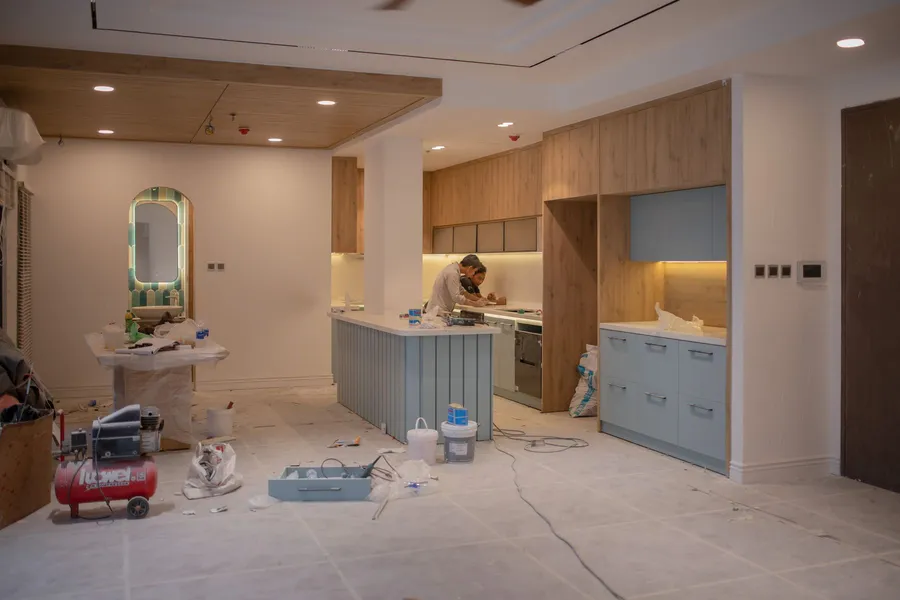
French kitchens follow the NF C 15-100 electrical standard, which sets out how many sockets a kitchen needs and where they can sit. The detail that catches owners out most: the hob and the oven each need their own dedicated circuit, and older Riviera kitchens, especially in houses last renovated decades ago, often don't have them. Before you finalise a layout, ask the electrician to confirm the existing circuits meet the current rules, and make sure any extra circuit work is on the devis instead of discovered halfway through the fit.
Gas is more tightly regulated again. Creating a new gas supply, moving a gas hob or adding a fixed gas appliance is work for a qualified professional, and it ends with a certificat de conformité that you should keep with the house paperwork. If you're keeping an existing gas hob in a new position, check the date printed on the flexible connection hose behind it: these hoses expire and have to be replaced, and it is routinely missed in older Riviera kitchens. Ask your fitter to check it as a matter of course.
Managing the job
Who coordinates the trades when there is no general contractor?
A kitchen usually touches three or four trades: the cuisiniste's fitters, a plumber, an electrician, and sometimes a tiler or a plasterer if walls are being opened up. When you buy the whole package from a cuisiniste, their project manager typically sequences the trades for you, even where some are subcontracted. When you're assembling the job yourself, from a kitchen bought abroad or fitted by an independent artisan, that sequencing becomes your job or the job of whoever you hire to do it.
The order matters. Plumbing and electrical first-fix work (moving pipes and cables inside the walls) has to happen before the units go in, not after. If you're not on-site for the whole job, a maître d'oeuvre or a cuisiniste with in-house project management earns their fee here, because a missed sequencing step means pulling a finished kitchen apart to fix it.
Before you sign
What should a kitchen devis include?
The lines that matter on a kitchen devis are the ones a showroom tends to bundle: units, worktop, each appliance, delivery and fitting, priced separately, with a brand and reference for anything you'll check against the sample. Electrical and plumbing work, if it's part of the same job, gets its own lines instead of being folded into "installation".
The TVA appears per rate, a 10% subtotal for labour and built-in units and a 20% subtotal for appliances, with the two-year certification sentence for you to sign. The payment schedule, start date and expected duration should all be written down. The fitting company's garantie décennale insurer and policy number should be printed on the devis, as on any French builder's quote; if they aren't, ask before you sign. For the arrêté requiring a written devis on any repair or maintenance job whatever the amount, see the renovation hub.
French terms
Key French kitchen renovation terms
Key French terms for this service
Questions
Frequently asked questions about kitchen renovation on the Cote d'Azur
If your question isn't here, send it with your request and we'll answer it directly.
Yes, fitting-only jobs are common, especially for owners who know a supplier back home. The fitting labour still qualifies for the 10% TVA rate on a home over two years old; the units themselves were bought outside that invoice, so their tax treatment depends on where you bought them, not on the French devis. Tell the fitter up front that units are arriving from abroad, since delivery damage and missing parts are your problem to chase, not the fitter's, and factor a buffer into your schedule in case something arrives short.
Yes. As the renovation hub explains, a written devis is required for repair and maintenance work whatever the amount, under the arrêté of 24 January 2017. There's no minimum figure below which a verbal agreement is acceptable. Get it in writing before anyone starts.
Usually, yes, unless the existing circuits already meet current standards and every socket stays exactly where it is. Moving a run of units means moving the sockets above the worktop, and French kitchens have specific circuit requirements that most houses built before the last renovation don't meet. Have an electrician confirm the existing setup before the cuisiniste finalises the layout, so you're not adding electrical work after the units are ordered.
Yes, the trades on it change. Switching to induction takes the gas work off the devis and adds electrical work instead: the hob needs its own circuit, which older kitchens often don't have, so check the electrician's quote includes it. Keeping or moving a gas hob means regulated gas work that has to end with a certificate of conformity, so make sure the devis says who provides it.
The fitting company is, through its own insurance. That's one more reason to use a registered cuisiniste or artisan instead of an informal fitter with no paperwork. Ask for proof of insurance before work starts, alongside the garantie décennale that covers any structural consequence of the work. If the devis doesn't name an insurer, ask why before you sign.