Solar panel installation on the Cote d'Azur, with English-speaking specialists
Photovoltaic panels on the Riviera generate 1,200-1,400 kWh per kWp per year from a south-facing roof at the right tilt. That's roughly 50% more than a comparable installation in northern France, and nearly double what you'd get in London. The French autoconsommation system, the permit rules and the subsidy structure are all specific to France. Here's what you need to know before talking to an installer.
Looking for an English-speaking installer on the Côte d'Azur? Get quotes →
How it works
Grid-connected photovoltaic systems in France
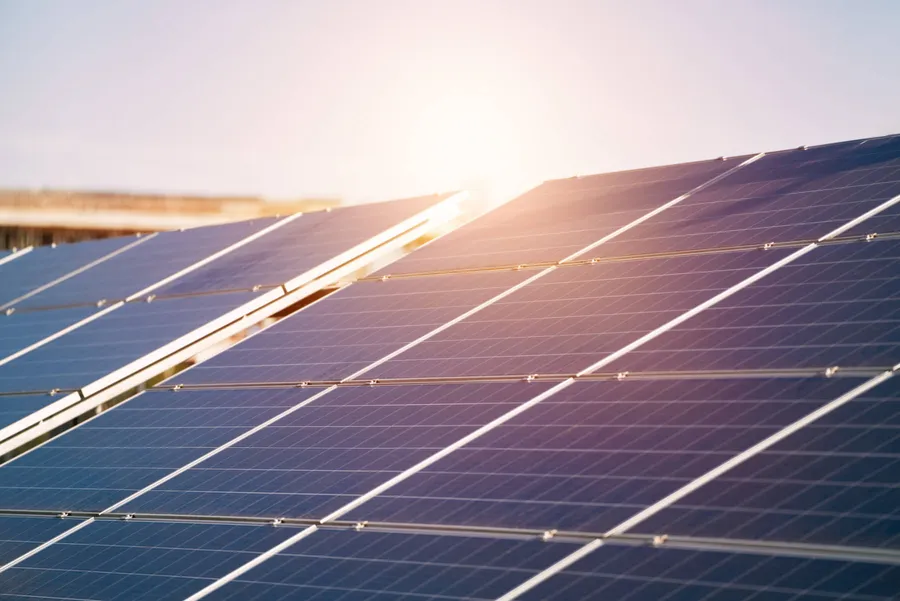
Photovoltaic panels convert sunlight directly into direct current (DC) electricity. An inverter converts this to alternating current (AC) for use in the house. Most residential systems are grid-connected: you use what you generate in real time, and any surplus is exported to the grid automatically.
The French model for this is called autoconsommation avec vente du surplus. You have an EDF OA (obligation d'achat) contract that purchases your surplus generation at a regulated price. You also receive a prime à l'autoconsommation (self-consumption premium) paid over five years, which is calculated based on your system's capacity when the contract is registered.
The key financial principle: electricity you use yourself is worth more than electricity you export. You save the full retail price of electricity for every kWh you self-consume. You receive only the lower EDF OA purchase price for surplus you export. This is why the financial case for solar in France is built around pairing panels with high-consumption daytime loads (heat pumps, pool pumps, EV chargers, washing machines on timers) rather than simply maximising panel capacity for export.
For second-home owners who are only at the property seasonally, the self-consumption rate is naturally lower. The panels generate year-round but peak consumption often isn't there during the week. Battery storage can improve this by storing midday surplus for use in the evenings, but the economics still differ from a year-round primary residence.
Sizing your system
How much will a solar system generate on the Cote d'Azur?
Generation is measured in kWh per kWp per year (kilowatt-hours per kilowatt-peak of installed capacity per year). On the Cote d'Azur, south-facing panels at a 30-35 degree tilt generate roughly 1,200-1,400 kWh per kWp. East or west-facing installations generate less (typically 900-1,100 kWh per kWp) but produce a more spread-out generation curve across the day, which can be useful for improving self-consumption.
Typical system sizes and annual generation estimates:
A typical French household consumes 4,500-6,000 kWh per year. A 6kWp system generates more than most households use annually, though timing means you'll still import from the grid at night and export during peak midday generation. The right system size depends on your consumption pattern, not just your annual total.
Equipment
Solar panel brands and inverter choices in France
The solar panel market in France is served by a mix of European and Asian manufacturers. The most commonly specified brands in quality residential installations on the Riviera include:
SunPower panels have among the highest efficiency ratings commercially available and a strong warranty (25 years product and performance). They carry a price premium but are used in installations where roof space is limited and you want maximum output per panel.
Q Cells (Hanwha) are widely used in France and are a strong mid-to-premium option. Good efficiency, solid warranty terms, well-supported by French installers.
Canadian Solar is a major manufacturer with a good reputation in the French market, competitive pricing, and reliable performance data. Commonly used in larger residential and commercial installations.
On the inverter side, SolarEdge and Enphase are the two main systems used in residential installations. SolarEdge uses a string inverter with per-panel power optimisers; Enphase uses per-panel micro-inverters. Both provide panel-level monitoring and reduce shading losses. SolarEdge is typically cheaper for larger systems; Enphase is preferred for complex roofs with multiple orientations. Fronius string inverters are also well-regarded and widely used in the region for simpler installations.
Get matched with vetted English-speaking installers in your area.
Get quotesWhat to budget
Solar panel installation costs on the Cote d'Azur
Prices below are for fully installed, commissioned grid-connected systems on an existing roof. Pre-subsidy figures.
TVA at 10% applies to systems under 3kWp on existing buildings, saving around 900 EUR on a 9,000 EUR installation versus standard 20% TVA. The prime à l'autoconsommation is paid by EDF OA over five years and varies by system size and application date.
RGE QualiPV certification is required for the installer to access the TVA réduite rate and the prime à l'autoconsommation. Check certification before signing a devis.
Coming from abroad
What's different from back home
UK
The UK's Smart Export Guarantee pays a per-kWh rate for all exported electricity. France's autoconsommation system is structurally different: you receive the prime à l'autoconsommation over five years (a premium payment, not a per-kWh rate), and you're paid by EDF OA for surplus at a lower rate. The UK model incentivises export; the French model incentivises self-consumption. If you've optimised a UK installation for export, the same approach won't work as well in France. Design your system around what you'll actually use during the day.
US
US net metering credits solar owners at the full retail electricity rate for exports. That mechanism doesn't exist in France. The EDF OA purchase price is set well below retail, which changes the economics significantly. American homeowners accustomed to generous net metering should recalibrate: the financial case in France depends on consuming your own generation directly, and the returns are more modest on the export side. The permit process is also simpler for standard residential installations than in many US jurisdictions.
Germany
Germany's Einspeisevergütung feed-in tariff is a different structure from the French autoconsommation system. The German model traditionally paid for all generation (or all exported generation) at a set rate. France's system focuses support on self-consumption rather than generation volume. German buyers familiar with solar often have realistic expectations about system performance, which is useful; the difference is understanding that the French financial model requires a different optimisation approach.
Choosing a contractor
What to look for in a solar installer on the Cote d'Azur
RGE QualiPV certification is the specific label to ask for. A general RGE certificate covering insulation or heating does not cover solar PV installation. QualiPV is the qualification that unlocks the prime à l'autoconsommation from EDF OA and the TVA réduite. Ask to see the certificate and check the expiry date.
Ask about the EDF OA application process. Your installer should handle the application for the autoconsommation contract and the prime à l'autoconsommation as part of commissioning. An installer who isn't familiar with this process, or who leaves it to you to handle, is a red flag. The application has technical requirements that depend on the installation specification.
The devis should specify: panel make and model (with efficiency and warranty terms), inverter make and model, total installed capacity (kWp), expected annual generation (kWh/year based on your roof orientation), installation scope (roof type, scaffold if needed), electrical connection, commissioning, and the EDF OA application. If it's a round number without these details, ask for more.
For protected zones, ask explicitly whether the installer has experience with ABF applications. The Architecte des Batiments de France must approve modifications in conservation areas, and an installer who hasn't done this before will slow the process down.
French terms
Key terms to know
Key French terms for this service
Questions
Frequently asked questions about solar panels on the Cote d'Azur
If your question isn't here, send it with your request and we'll answer it directly.
A 3kWp system (5-8 panels) installed on an existing roof costs roughly 6,000-9,000 EUR, including panels, inverter, mounting, electrical connection and commissioning. A 6kWp system for a medium villa runs 10,000-15,000 EUR. Prices depend on brand, roof type, whether scaffolding is needed, and inverter choice (string inverter versus micro-inverters, which add cost but provide per-panel monitoring and avoid shading losses). After the prime à l'autoconsommation and TVA réduite, the net cost for a qualifying system can be 1,000-2,500 EUR lower depending on system size and current premium rates.
It's a premium payment from EDF OA (the national purchase obligation scheme) for self-consuming solar PV installations. Available for systems up to 500kWp. The payment is made over five years and the amount per kWp is set at the time of application — it decreases each quarter as more installations are connected. For a 3kWp system, it represents a few hundred euros per year over five years; for a 9kWp system, proportionally more. Your installer applies for the EDF OA contract as part of commissioning. The payment is not large relative to system cost, but it's a guaranteed income stream on top of the electricity savings from self-consumption.
For most residential installations on existing roofs, you need to file a declaration préalable des travaux (prior declaration) with the mairie rather than full planning permission. Systems under 3kWp on an existing roof: declaration préalable. Systems over 3kWp: also declaration préalable in most cases. Ground-mounted systems and new structures: permis de construire. Properties in protected zones (ABF conservation areas, classified landscapes, historic monument proximity) may face additional constraints, and the Architecte des Batiments de France may need to approve the installation. Your installer should handle the administrative filing and flag any protected-zone complications before starting.
South-facing panels at a 30-35 degree tilt generate roughly 1,200-1,400 kWh per kWp per year on the Riviera. So a 3kWp system generates 3,600-4,200 kWh per year; a 6kWp system generates 7,200-8,400 kWh. For context, a typical French household consumes 4,500-6,000 kWh per year. A 6kWp system on the Cote d'Azur could theoretically cover all of a household's annual consumption, though in practice you will export some and import some depending on the time of day. East-west facing installations generate less per kWp but produce a flatter generation profile across the day, which can improve self-consumption rates.
Under an autoconsommation avec vente du surplus contract, excess generation that you don't use in the moment is exported to the grid and sold to EDF OA at a regulated purchase price. This price is currently significantly lower than the retail electricity price you pay from the grid, which is why the French system rewards maximising self-consumption. If you want to store surplus for later use rather than exporting it, a battery storage system is the solution. See our battery storage page for detail on that option.
Ready to get quotes from English-speaking solar specialists on the Côte d'Azur?
Tell us what you need and we'll connect you with vetted, English-speaking tradespeople in Nice, Antibes, Cannes and across the Côte d'Azur.