Guide
Solar panel installation costs in the south of France: what to expect
Understanding the cost of a solar installation before you collect quotes helps you evaluate what you're being offered. The figures below are based on residential installations in the Alpes-Maritimes and Var departments in 2024-2025, covering a range of property types and system sizes. All figures are total installed costs including panels, inverter, mounting hardware, electrical connection, and standard commissioning. TVA at the applicable rate is included.
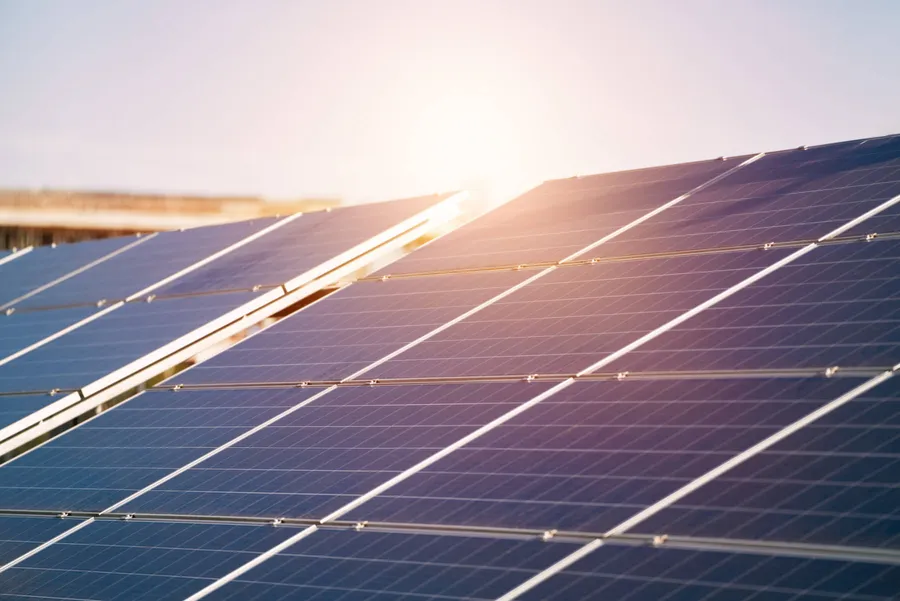
Standard residential system costs
Residential solar installations are typically sized by peak output capacity, expressed in kilowatts-peak (kWp). Common system sizes for houses on the Cote d'Azur and what they typically cost:
- 3 kWp (8-10 panels): 6,000-9,000 EUR. Suitable for a small to medium house or apartment with moderate electricity use. Annual generation of around 4,000-4,500 kWh in this climate.
- 6 kWp (16-18 panels): 10,000-15,000 EUR. A common size for a family house with a heat pump. Annual generation of around 8,000-9,000 kWh.
- 9 kWp (24-26 panels): 16,000-22,000 EUR. For larger properties or where EV charging is part of the load. Annual generation of around 12,000-13,000 kWh.
- 12 kWp (32-36 panels): 22,000-30,000 EUR. Suitable for high-consumption villas or properties combining solar with battery storage and an EV.
These are ranges, not averages. The actual cost for your installation depends on the factors described below.
What the south of France climate means for generation
The Cote d'Azur is among the best locations in France for solar. Annual irradiance in the Alpes-Maritimes is typically 1,500-1,600 kWh/m2, compared with 1,100-1,200 kWh/m2 in Paris. In practice, a well-installed system here will generate 1,300-1,400 kWh per kWp per year. For a 6 kWp system, that means roughly 8,000 kWh annually, enough to cover around 60-70% of typical electricity consumption for a family house.
That generation figure assumes a south-facing roof at 30-35 degrees pitch with no significant shading. East-west facing installations generate 10-20% less but spread generation more evenly across the day, which can be useful for self-consumption matching if your consumption is spread throughout the day.
What affects the price
The variation within each range is driven by several factors:
- Panel brand and efficiency: premium panels (Sunpower, LG, Panasonic HIT) cost more but generate more per square metre, which matters if roof space is limited. Standard Tier 1 panels (JinkoSolar, LONGi, Canadian Solar) offer good performance at lower cost.
- Inverter type: string inverters are the standard and lowest cost option. Microinverters (one per panel) or power optimisers add 1,500-3,000 EUR but improve performance on partially shaded roofs and provide per-panel monitoring.
- Roof type and accessibility: flat roofs require mounting frames (adds cost). Roof tiles that require careful removal for cable routing add labour time. Scaffolding for high or steep roofs adds 800-2,500 EUR.
- Electrical panel capacity: some older properties need a consumer unit upgrade or additional circuit protection before connecting solar. This adds 500-1,500 EUR if required.
- Grid connection declaration: connecting a system to the grid requires a declaration to Enedis (the grid operator). A consuel attestation may be required, which adds modest cost. Your installer handles both.
- Battery storage: adding a battery storage system substantially increases cost. A 10 kWh battery adds 4,000-8,000 EUR depending on brand and installation complexity. This is a separate decision from the panel installation.
Self-consumption vs feed-in tariff
In France, residential solar is typically installed under autoconsommation with optional sale of surplus (vente du surplus). You use what you generate, and any excess you don't use can be sold to EDF at a regulated tariff (around 0.10-0.13 EUR/kWh as of 2024-25, compared with a purchase price of around 0.22-0.25 EUR/kWh). The economics strongly favour consuming as much of your own generation as possible.
For a second home or a property not always occupied, this matters. If no one is there to use the electricity, most of your generation goes to the grid at the lower feed-in rate. Sizing a system for a second home requires thinking about when the property is occupied and what loads are present. Pairing solar with a battery changes this calculation.
Full feed-in tariff contracts (selling everything you generate) are available for systems under 9 kWp but are generally not the most economical option for residential properties.
Available subsidies
The subsidy landscape for residential solar in France is more limited than for heat pumps, but there are applicable schemes:
- TVA reduite: residential solar panel installations on properties over 2 years old qualify for 10% TVA rather than 20%. This is already included in properly quoted prices. Confirm it appears on your devis.
- MaPrimeRenov': as of 2024-25, MaPrimeRenov' for solar photovoltaic systems is limited and has been subject to changes. It is worth checking current eligibility at maprimerenov.gouv.fr before assuming it applies to your project. The scheme is more consistently available for solar water heating systems than for PV panels.
- Prime a l'autoconsommation: a one-time premium from EDF OA (Obligation d'Achat) for systems under 100 kWp, scaled by system size. The amount is revised periodically, so check current rates with your installer or on the EDF OA website. Your installer registers the system and the payment comes after commissioning.
Unlike heat pump subsidies, solar grants don't require specific RGE certification for the main schemes, but Qualibat certification for the installer is good practice and may be required for certain financing or insurance products.
Getting quotes
Collect at least three devis for any solar installation. When comparing them, check each quote specifies:
- Panel brand, model, quantity, and individual panel wattage
- Inverter brand and model (and whether microinverters or optimisers are included)
- Total system capacity in kWp and projected annual generation in kWh
- Mounting system and any scaffolding or special access costs
- Grid connection and Enedis declaration handling
- TVA rate applied
- Whether the prime a l'autoconsommation application is included in the service
A quote that shows only a total price without specifying the equipment makes meaningful comparison impossible. Ask for itemised devis from all three contractors before deciding.
Related pages
Ready to get quotes from English-speaking solar specialists on the Côte d'Azur?
Tell us what you need and we'll connect you with vetted, English-speaking tradespeople in Nice, Antibes, Cannes and across the Côte d'Azur.