Guide
Heat pump costs on the Cote d'Azur: what to expect
Getting a sense of what a heat pump should cost before you start collecting quotes is useful. It helps you spot a quote that's too high, or one that's suspiciously low and probably missing something. The figures below are based on actual installation costs in the Alpes-Maritimes and Var departments in 2024-2025, covering a range of property types and system configurations.
All figures are total installed costs including equipment, labour, electrical work, refrigerant charge, and standard commissioning. TVA at the applicable rate is included. They are ranges, not averages: the actual cost for your property will depend on specific factors covered below.
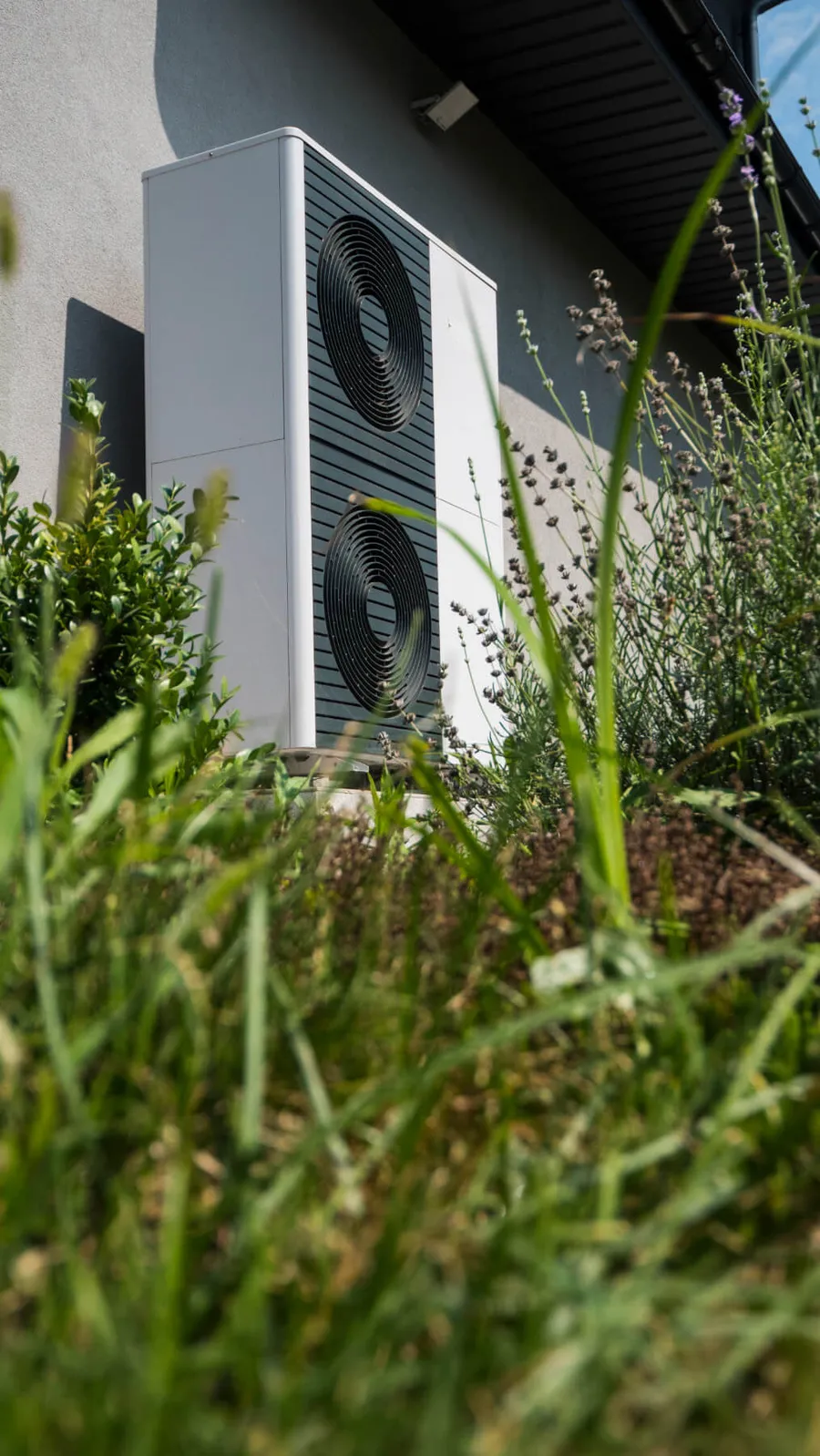
Air-source split heat pump (heating and cooling)
The most common installation in the region. One outdoor unit connected to one indoor wall unit, serving a single room or open-plan living area.
- Studio or single room (up to 25 m²): 2,500-4,500 EUR
- Small house or apartment (60-80 m²): 5,000-8,000 EUR
- Larger house (100-150 m²): 8,000-14,000 EUR with multiple indoor units
These are for reversible split systems, which handle both heating and cooling through the same unit. Single-function (heating only) units are rarely installed in this region any more.
Multi-split reversible system
One outdoor unit connected to multiple indoor units in different rooms, controlled independently. This is the standard choice for a villa or larger apartment where you want zone control.
- 2-zone system (1 outdoor, 2 indoor units): 6,000-10,000 EUR
- 3-zone system: 9,000-14,000 EUR
- 4 to 5-zone system: 12,000-22,000 EUR
The upper end of the range applies to premium brands (Daikin, Mitsubishi Electric, Panasonic), large properties, or installations requiring significant pipework runs through masonry walls or ceilings. The lower end typically reflects mid-range brands, straightforward access, and short pipe runs.
Air-to-water heat pump (PAC air-eau)
This type connects to the property's wet heating system: radiators, underfloor heating, or a hot water cylinder. The heat pump replaces what was previously a boiler.
- Heat pump unit alone (supply and installation): 8,000-15,000 EUR
- With full radiator replacement to low-temperature specification: add 4,000-10,000 EUR depending on number of radiators
- With new underfloor heating in a renovation context: significantly more; this is a major building project
Air-to-water systems are less common in the Cote d'Azur than air-to-air splits, partly because many properties here were built without central wet heating and partly because the mild climate makes split systems sufficient. They become relevant when a property already has radiators or underfloor heating and you want to replace an oil or gas boiler.
Ground-source heat pump (PAC geothermique)
These extract heat from the ground via buried horizontal collectors or vertical boreholes. They achieve higher efficiency than air-source systems because ground temperatures are more stable, but the installation cost is substantially higher.
- Horizontal ground loop (requires significant garden area): 15,000-22,000 EUR
- Vertical borehole (more compact, can suit smaller plots): 20,000-30,000 EUR
These figures include the groundwork but not major landscaping reinstatement. Ground-source systems are a minority in this region due to land requirements, geology, and the fact that air-source systems already perform well in the local climate. They make most sense for larger rural properties with available land and a requirement for both space heating and hot water.
What affects the price
The variation within each range is driven by several factors:
- Property size and ceiling height: larger volumes need more capacity
- Number of zones: each additional indoor unit adds cost for the unit, pipework, and electrical connection
- Existing heating system: replacing a boiler and existing pipework adds to the scope; a property with no existing system may need more electrical work
- Brand: Daikin and Mitsubishi Electric are typically 15-30% more expensive than Midea, Vivax, or Gree at comparable capacity; mid-range brands like Atlantic, Hitachi, and LG fall in between
- Access: outdoor units installed on a ground-level terrace are cheaper than those requiring scaffold access or roof-level mounting
- Pipework runs: long runs through masonry walls or ceilings add time and labour cost
- Electrical supply: some older properties need a circuit upgrade or additional consumer unit capacity; this adds 500-1,500 EUR typically
- Season and lead time: installation in summer (peak cooling demand) and winter (heating season) can attract premium pricing from busy contractors
Available subsidies and their impact
For installations that qualify, subsidies can significantly reduce the net cost. The main schemes are:
- MaPrimeRenov': the government grant; amount depends on household income band and work type. The reduction depends on your income band and current rates. Check the current simulator at maprimerenov.gouv.fr for your specific situation.
- CEE (Certificats d'Economies d'Energie): the energy supplier scheme, usually handled by your contractor; stacks on top of MaPrimeRenov'
- TVA reduite: heat pump installation on properties over 2 years old qualifies for a reduced TVA rate rather than the standard 20% (verify on your devis); this is already included in the standard price quotes from most contractors
The combined effect of MaPrimeRenov' and CEE can significantly reduce the net cost of a qualifying heat pump installation. Lower-income bands receive a larger contribution than higher-income bands. For secondary residences, the amounts are lower but still relevant. Use the simulator at maprimerenov.gouv.fr to get a current figure before collecting quotes.
Getting quotes: what to watch for
Always collect at least three devis for any heat pump installation. When comparing them, check that each quote includes:
- The brand and model number of the outdoor and indoor units
- The capacity in kW and the seasonal efficiency ratings (SCOP and SEER)
- All electrical work required, including circuit protection and isolation
- The refrigerant charge (some quotes omit this and add it as a separate item)
- Commissioning and test run
- Any supplementary works needed (trunking, wall penetrations, drainage for the outdoor unit)
- TVA rate applied (should be 10% for heat pump installation on properties over 2 years old)
- The contractor's RGE qualification number
A quote that omits some of these items is not necessarily dishonest, but it makes comparison difficult. Ask for a revised devis that itemises everything before you make a decision.
Be cautious of quotes that are substantially cheaper than the others. Sometimes this reflects a smaller brand or less experienced installer; sometimes it means the quote is incomplete. Either way, ask what's different before assuming it's a better deal.
Related glossary entries
- PAC (Pompe a chaleur): what the terminology on quotes means
- MaPrimeRenov': the main grant scheme
- CEE: the energy supplier subsidy
- RGE certification: how to verify your contractor before signing
- Devis: what your quote should contain
Ready to get quotes from English-speaking specialists on the Côte d'Azur?
Tell us what you need and we'll connect you with vetted, English-speaking tradespeople in Nice, Antibes, Cannes and across the Côte d'Azur.