Oil heating on the Cote d'Azur: servicing, repair, and switching to a heat pump
Many older rural properties on the Cote d'Azur still run on oil (fioul domestique). New oil installations are no longer permitted, and the subsidy system now strongly incentivises switching. Whether you need your existing boiler maintained or want to understand your options for switching, we connect you with English-speaking contractors who know this terrain.
Looking for an English-speaking installer on the Côte d'Azur? Get quotes →
What you need to know
Who still has oil heating on the Cote d'Azur, and what are their options?
Oil heating (chauffage au fioul) is mainly found in older rural and semi-rural properties that were built before mains gas or heat pump technology was readily accessible. In the Alpes-Maritimes and Var departments, this means many mas, bastides, and hillside villas dating from the 1960s through 1980s in areas without a mains gas connection. The boiler burns domestic heating oil (fioul domestique), stored in a tank on the property.
France banned new oil boiler installations in new residential buildings in 2022 and has removed subsidies for like-for-like oil boiler replacements in existing properties. Annual servicing of existing systems remains legal and is required by law. But the regulatory and economic direction is clear: oil heating is a system to maintain until you switch, not one to invest in further.
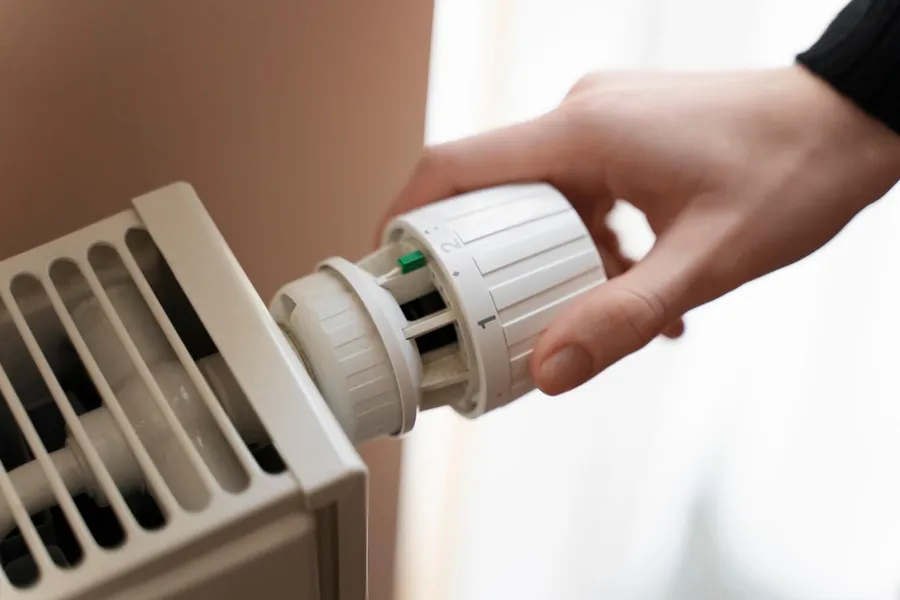
For most oil-heated properties on the Cote d'Azur, the relevant question is when to switch rather than whether. The mild winter climate here means heat pumps run at high efficiency for most of the heating season. MaPrimeRénov' grants for switching from oil to a heat pump are among the highest available under the scheme. And the oil tank, once emptied and decommissioned, removes a maintenance liability from the property entirely.
What we can help with
What oil heating work do contractors on the Cote d'Azur carry out?
When the boiler reaches end of life
Switching from oil to a heat pump
When an oil boiler needs replacement, a heat pump is the subsidised path. An air-to-water heat pump can use the existing radiator circuit (subject to a room-by-room heat loss check), removing the need to rebuild the distribution system. The oil tank is decommissioned as part of the project. MaPrimeRénov' grants for oil-to-heat-pump switches are among the highest available. The combination of lower running costs, the grant, and the removal of the oil tank makes this switch straightforward to justify financially for most properties. See our heat pump page for full details on the process and costs.
Annual boiler service
French law requires an annual maintenance check on all residential oil boilers. The technician checks combustion efficiency, burner and nozzle condition, heat exchanger, flue, and safety controls, and issues a maintenance certificate. Annual servicing maintains the boiler at its rated efficiency and keeps your home insurance cover valid for heating system incidents.
Boiler repair
Common oil boiler faults include burner failures, nozzle blockages, pressure issues, and pump failures. Most can be diagnosed and repaired in a single visit. For boilers over 15-20 years old where repair costs are approaching the cost of a replacement, a switch to a heat pump is worth factoring into the decision rather than committing to further repairs on a system at end of life.
Oil tank inspection and decommissioning
Oil tanks require periodic inspection for corrosion and leaks — a leaking tank is an environmental liability. Above-ground tanks are inspected visually and by a specialist if leakage is suspected. When switching to a heat pump, the tank must be properly decommissioned: drained, cleaned, and either removed or neutralised in place. Buried tanks require specialist work. This should be included in any oil-to-heat-pump project scope.
Get matched with vetted English-speaking installers in your area.
Get quotesThe case for switching
Why does switching from oil to a heat pump make sense on the Cote d'Azur?
The economics of sticking with oil heating have deteriorated considerably. Heating oil prices have risen significantly over the past decade and remain volatile, linked to global oil markets. A heat pump on the Cote d'Azur, running in mild winter conditions, achieves a COP of 3-4 — meaning it delivers 3-4 kWh of heat for every 1 kWh of electricity used. Even at current electricity prices, the effective cost per kWh of heat from a heat pump is substantially lower than from an oil boiler.
The DPE (energy performance certificate) is another consideration, particularly for owners planning to sell or let the property. An oil-heated property typically rates at E or F. From 2025, properties rated G are banned from new rental agreements, and F-rated properties face the same restriction from 2028. Switching to a heat pump routinely moves a property from E or F to C or D, which removes this exposure and improves resale appeal to buyers who are now far more aware of running costs than they were a decade ago.
For second-home owners, the picture is similar. The oil tank requires periodic monitoring, refilling, and inspection — ongoing management for a property that may be unoccupied for months at a time. Removing the tank and switching to a heat pump simplifies the property's systems considerably. A smart thermostat can keep the property at a frost-protection temperature during absence without the concern of a tank running low mid-winter.
What to budget
What does oil boiler servicing and switching cost on the Cote d'Azur?
Oil boiler service and repair costs are separate from the heat pump switch. For full heat pump installation costs and subsidy amounts, see our heat pump page.
TVA réduite at 10% applies to boiler service and repair on qualifying residential properties. There are no subsidies for like-for-like oil boiler replacement. For the heat pump switch, see current grant amounts at maprimerenov.gouv.fr.
French terms
Key terms to know
Key French terms for this service
Questions
Frequently asked questions about oil heating on the Cote d'Azur
If your question isn't here, send it with your request and we'll answer it directly.
Maintaining and servicing an existing oil boiler is legal and you are not required to switch. What has changed is the subsidy and regulatory environment around new installations. New oil boiler installations in residential properties have been effectively banned since 2022 — you cannot install a new oil boiler in a new build, and subsidies for oil boiler replacements in existing properties have been removed. If your existing oil boiler fails and you need to replace it, the practical path forward is a heat pump, not a new oil boiler. A like-for-like oil boiler replacement is technically possible in an existing property, but you would be doing it without subsidy support and against the direction of French energy regulation.
Oil-to-heat-pump conversions are among the better-supported scenarios under MaPrimeRénov', because oil heating is the highest-emission residential heating fuel and France has been actively incentivising the switch. Verify the current grant amounts at maprimerenov.gouv.fr before proceeding, as the scheme structure has been revised in recent years. CEE subsidies from energy suppliers can stack on top. TVA réduite at 5.5% applies to qualifying heat pump installation on residential properties over 2 years old. The heat pump contractor must hold RGE certification. Apply at maprimerenov.gouv.fr before work begins — not retrospectively. The subsidy amounts are revised periodically, so the figures worth working with are the current ones at the time of your application.
The oil tank (cuve à fioul) must be decommissioned properly. You cannot simply leave it in place. The decommissioning process involves draining any remaining fuel, cleaning the tank, and either removing it entirely or neutralising it in situ (filling with an inert material). Buried or underground tanks require excavation for removal or specialist in-situ neutralisation. The cost depends on tank size, location, and whether it is above ground or buried. A reputable installer will include tank decommissioning in their scope for an oil-to-heat-pump switch, or will confirm which specialist handles it. Ask specifically about this before signing anything.
It depends on the heat pump type and the size of your radiators. An air-to-water heat pump works best with a lower flow temperature than an oil boiler — typically 45-55°C rather than 70-80°C. Standard radiators sized for oil heating may be large enough to work adequately at lower flow temperatures, but this needs to be assessed room by room. In some properties, radiators will need upgrading or replacing to work efficiently with a heat pump. Underfloor heating works very well with heat pumps. Your installer should carry out a heat loss calculation and check each room before confirming whether your existing radiators are suitable. Oversizing is often the difference between a heat pump installation that performs well and one that runs inefficiently.
Yes. Like gas boilers, oil boilers in France require an annual maintenance check by a qualified technician. The check covers combustion efficiency, burner condition, heat exchanger, flue integrity, and safety controls. A maintenance certificate must be issued. Annual servicing keeps the boiler running at its rated efficiency — oil boilers lose efficiency quickly if the burner and nozzle are not kept clean — and maintains your home insurance cover for heating system incidents. If the property has been unoccupied and the boiler has not been serviced for some time, getting it checked before heavy use is advisable.