Hybrid heating systems on the Côte d'Azur
A hybrid heating system combines a heat pump with a second heat source: either a gas boiler for backup in colder conditions, or solar panels to cut the electricity cost of running the heat pump. The right combination depends on your property's location, your existing setup, and what you're trying to achieve. We connect English-speaking homeowners with contractors who can explain both options clearly.
Looking for an English-speaking installer on the Côte d'Azur? Get quotes →
English-speaking specialists
What exactly does 'hybrid heating' mean?
The word "hybrid" covers two quite different approaches in home heating. Understanding which one applies to your situation helps you ask the right questions and compare quotes accurately.
The first is the PAC hybride: a heat pump and gas boiler working as an integrated system, with automatic switching between the two based on outdoor temperature. This is a recognised product category in France with its own subsidy rules. It is more common in northern France where winters are cold enough to challenge heat pump efficiency.
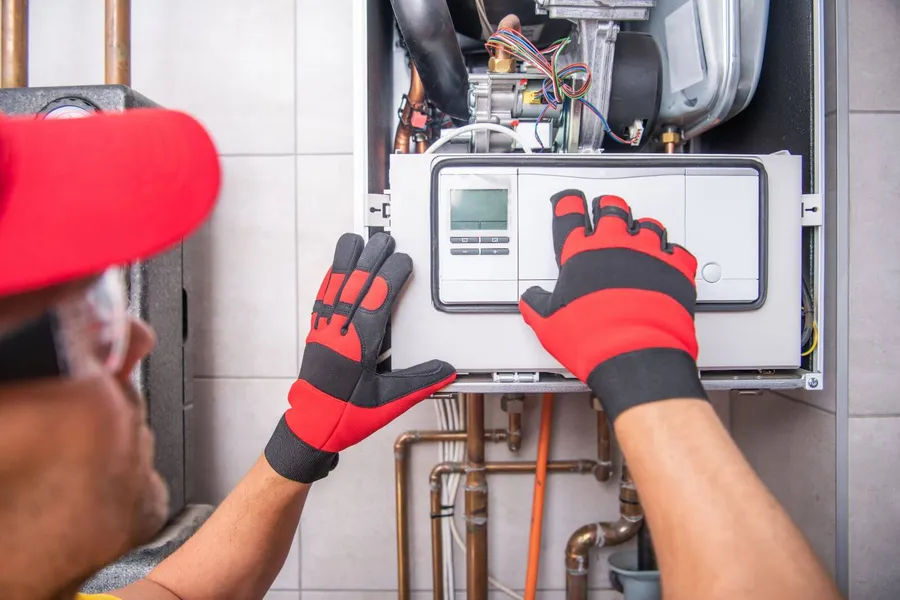
The second is combining a heat pump with solar PV — not a PAC hybride in the French technical sense, but a practical combination that makes a lot of sense on the Côte d'Azur. Your solar panels generate the electricity that runs your heat pump, reducing running costs. A smart energy management system handles how the two interact.
For properties with existing gas infrastructure, there is also a third option: adding a heat pump alongside the existing boiler as a gradual transition, running both systems without the integrated control of a true PAC hybride. This is less elegant but can be the right pragmatic choice for a property that is not ready for a full heat pump installation.
System types
Which hybrid approach suits your Riviera property?
Best for inland properties
PAC hybride: heat pump plus gas boiler
An integrated system where the heat pump handles most of the heating load, with the gas boiler as a backup for peak demand or very cold periods. A single control unit manages both automatically, switching based on a temperature threshold you configure with your installer. The heat pump typically operates at higher efficiency during mild periods (autumn through spring), while the gas boiler handles the coldest nights without the heat pump running at reduced efficiency.
On the Côte d'Azur coast this setup is rarely necessary, as the climate rarely requires the gas backup. It makes more sense for properties in the Alpes-Maritimes hills or the Var interior, where winter temperatures are lower and sharper frosts occur.
Heat pump plus solar PV
The combination that makes most sense on the Riviera. Solar panels generate electricity during daylight hours; a smart system prioritises that electricity to run the heat pump during the day, cutting electricity bills. In summer, the same solar output powers the heat pump in cooling mode. With around 300 sunny days per year on the Côte d'Azur, the economics of this combination are stronger here than almost anywhere in France.
Adding a heat pump alongside an existing boiler
For properties where the gas boiler is recent and still functioning well, adding an air-to-air heat pump for cooling and seasonal heating is a lower-disruption option. The two systems run independently rather than as an integrated PAC hybride. This does not attract the same subsidies as a formal hybrid installation, but avoids the cost of replacing a working boiler before its time.
The climate argument
Does the Côte d'Azur climate change the calculation?
The main reason to add a gas boiler backup to a heat pump is to cover periods when outdoor temperatures drop low enough that the heat pump's efficiency falls significantly. For heat pumps on the standard refrigerant cycle, performance starts to decline below around -5°C and the gas backup becomes cost-competitive.
On the Côte d'Azur coast (Nice, Cannes, Antibes, Menton), this threshold is rarely reached. Average January temperatures on the coast are 8 to 12°C in the day, dropping to 4 to 6°C at night. Frost is unusual, heavy frost is rare, and temperatures that would challenge a modern heat pump are exceptional. A well-specified standalone heat pump handles the full heating season without a gas backup.
Inland at altitude (Grasse at 350m, Valbonne, Tourrettes-sur-Loup, the Estérel or Var hills) the picture is different. Winter temperatures sit 2 to 5°C below the coast, and hard frosts occur several times per winter. For these properties, the gas backup argument has more weight. A hybrid system keeps you warm when conditions are harsh without running the heat pump at low efficiency.
The solar PV combination works well across the whole region. Solar irradiation on the Côte d'Azur is among the highest in metropolitan France. Even in winter, clear days produce meaningful electricity output. This makes the heat pump plus solar PV combination a strong case throughout the region regardless of altitude.
Get matched with vetted English-speaking installers in your area.
Get quotesWhat to budget
What does a hybrid heating system cost on the Côte d'Azur?
Costs vary significantly depending on the approach. Broad ranges for the Alpes-Maritimes and Var:
These figures are pre-subsidy. Both heat pump and solar components may qualify for separate schemes. Ask your contractor to produce two cost lines: the gross installed cost and the net cost after applicable subsidies, with each subsidy identified separately.
The comparison to make is not just the upfront cost, but the 10-year running cost including any subsidies. An independent heat pump plus solar PV, while higher upfront, often produces the best long-term outcome on the Côte d'Azur because of the solar resource.
Financial aid
Subsidies for hybrid heating installations
The subsidy picture for hybrid installations depends on exactly which components are being installed.
Heat pump component: A qualifying heat pump installed by an RGE-certified contractor is eligible for MaPrimeRénov'. Current rates and eligibility rules are published at maprimerenov.gouv.fr. CEE credits may also be available and are often arranged by the contractor directly.
Solar PV component: Solar panels qualify under different schemes, including a purchase premium (prime à l'autoconsommation) for systems with self-consumption. Details at enedis.fr and through your installer.
Gas boiler component: Replacing a gas boiler with another gas boiler does not attract subsidies in France. If a hybrid system includes a new gas boiler as backup, only the heat pump portion qualifies for energy renovation grants.
TVA réduite: A reduced TVA rate applies to qualifying energy renovation work in residential properties more than two years old. Your contractor confirms this on the devis.
For more detail on MaPrimeRénov', see our MaPrimeRénov' guide.
French terms
Key terms to know
Key French terms for this service
Questions
Frequently asked questions about hybrid heating systems
If your question isn't here, send it with your request and we'll answer it directly.
In French building energy terminology, a système hybride or PAC hybride refers specifically to a system that combines a heat pump with a gas boiler, with both units working together under a single control system. The heat pump handles heating when outdoor temperatures are mild and conditions are efficient for it. The gas boiler activates when temperatures drop to a point where the gas becomes more cost-effective than electricity for heat pump operation. The system manages this switching automatically based on a configurable temperature threshold. More loosely, "hybrid" is also used to describe combining a heat pump with solar PV to reduce the electricity cost of running the heat pump, a different concept, covered below.
For most coastal properties, no. The classic argument for a hybrid gas backup system is that heat pumps become less efficient when outdoor temperatures drop below around -5°C to -10°C, at which point gas becomes cheaper per unit of heat. On the Côte d'Azur coast, those temperatures simply do not occur. A well-specified standalone heat pump handles the entire winter heating requirement. Where a gas hybrid can make sense on the Riviera is for inland properties at altitude — Grasse, Valbonne, Tourrettes-sur-Loup, or the Var hills — where occasional sharp frosts do occur, or for property owners who already have a gas boiler in good condition and want to add heat pump capability without replacing everything at once.
The heat pump component of a hybrid installation qualifies for MaPrimeRénov' provided the contractor holds RGE certification. The gas boiler component does not attract specific subsidies. For a heat pump combined with solar PV, both elements have their own qualifying schemes: MaPrimeRénov' or CEE credits for the heat pump, and separate schemes for the solar panels. Check current rates and eligibility at maprimerenov.gouv.fr, and ask your contractor to model the combined subsidy picture before you commit to a specification.
Yes, and this is a genuinely worthwhile combination on the Côte d'Azur. The logic is straightforward: a heat pump runs on electricity, solar panels generate electricity, and on the Riviera the sun shines reliably for around 300 days a year. On a winter morning when the heat pump is running hardest, solar production is lower, so the offset is not perfect. But across the full year, particularly for cooling in summer, the electricity savings are real. A smart energy management system can prioritise sending solar production to the heat pump during the day and to a battery or grid export at other times.
An integrated PAC hybride unit (combining both systems in linked equipment) typically costs more upfront than either system alone. You are essentially paying for two heat sources, a unified control system, and the connection work between them. For a standard villa, expect installed costs to be notably higher than a standalone heat pump. The offsetting argument is that for properties where winter temperatures occasionally challenge a heat pump, you avoid the inefficiency hit at peak cold periods. Get a detailed devis that shows the heat pump specification, gas boiler specification, and control system separately so you can compare the hybrid option against a standalone heat pump fairly.