VMC installation on the Côte d'Azur
VMC (ventilation mécanique contrôlée) is a mandatory part of French building regulations and one of the most frequently overlooked systems in older Riviera properties. A failed or inadequate VMC is the most common underlying cause of mold in French apartments and villas. We connect English-speaking homeowners with certified contractors for VMC installation, upgrades, and maintenance.
Looking for an English-speaking installer on the Côte d'Azur? Get quotes →
English-speaking specialists
A system most expat owners have never heard of
VMC is not a concept most British, American, or German homeowners carry over from home. In the UK, homes rely on natural ventilation through gaps and trickle vents. In France, a mechanical system extracting air from wet rooms is standard building practice and legally required in new construction.
When expat buyers take on an older Riviera apartment or villa, the VMC is rarely mentioned in the sale. It is not glamorous, it is not visible, and estate agents do not discuss it. Discovering that the system has been blocked for years or the motor has failed typically happens when mold appears.
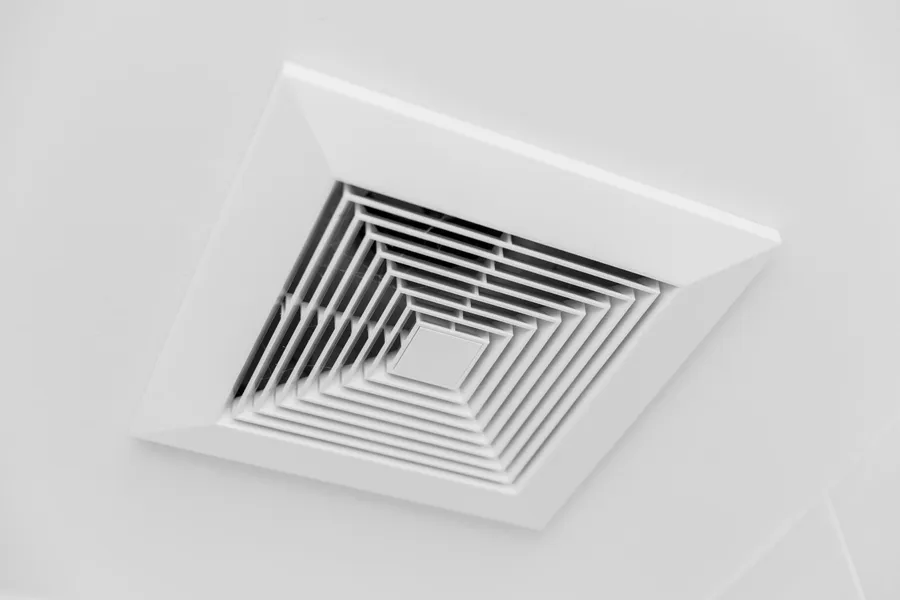
Explaining the different types of VMC, what needs replacing versus cleaning, and what a compliant installation looks like is a conversation that benefits from a shared language. A contractor who works regularly with English-speaking clients understands the baseline knowledge gap and explains clearly without assuming familiarity with French building terminology.
For second-home owners, a functioning VMC system is particularly important. Properties left unoccupied for extended periods depend entirely on the VMC to circulate air and prevent moisture build-up. Returning to a property that smells damp or has mold in the bathroom is almost always traceable to a non-functioning or inadequate ventilation system.
System types
Which VMC system is right for your property?
Most common in existing buildings
VMC simple flux hygro B
The most widely installed VMC type in French homes built or renovated in the last 30 years. Humidity sensors in each wet room vary the extraction rate automatically: higher when moisture is present (after a shower, while cooking), lower when rooms are dry. This balances effective ventilation against energy use. The hygro B designation means each room has its own sensor rather than a single central control.
For most existing properties on the Côte d'Azur, upgrading a failed simple flux system to a new hygro B unit is the standard recommendation: more efficient than the autoréglable (fixed-speed) predecessor it replaces, and substantially cheaper than a full double flux installation.
VMC simple flux autoréglable
Extracts at a constant rate from wet rooms regardless of humidity levels. The oldest and simplest type. Effective as a minimum standard but wastes energy by extracting at full rate even when rooms are empty or dry. Most autoréglable units in older buildings are now beyond their service life and due for replacement with a hygro B system.
VMC double flux
Extracts stale air from wet rooms and actively supplies fresh filtered air into living rooms and bedrooms simultaneously, with a heat exchanger that recovers warmth from the outgoing air. Significantly more energy-efficient than simple flux and provides better air quality — particularly relevant for modern well-insulated buildings where passive infiltration through walls and window frames is low. Installation cost is higher, but the improvement in comfort and air quality is substantial.
VMC thermodynamique
Combines a VMC double flux system with a heat pump for hot water production. The heat pump extracts energy from the outgoing stale air to heat domestic hot water, effectively making it nearly free to produce hot water during periods when ventilation is running. A niche but genuinely efficient option for renovations where all systems are being replaced together.
Get matched with vetted English-speaking installers in your area.
Get quotesWhat to budget
What does VMC installation cost on the Côte d'Azur?
Prices below cover the unit, ducting modifications, and installation for a standard apartment (3 to 4 wet rooms) or small villa. Larger properties, new duct runs through masonry, or full replacement of existing ducting will increase costs.
CEE credits may be available for upgrading from simple flux to double flux with heat recovery. Check current eligibility with your contractor. Reduced TVA applies to qualifying work in residential properties more than two years old.
The Mediterranean context
Why does ventilation matter more on the Côte d'Azur?
The Côte d'Azur climate appears dry (and it is, in summer). But the Mediterranean winter is more humid than most expats expect. October through March brings regular rainfall, sea mist, and periods of high humidity, often combined with relatively mild temperatures that allow moisture to linger rather than freezing or evaporating quickly.
Older stone buildings in Nice, Antibes, Menton, and the surrounding hill towns absorb and hold moisture in their walls. Without adequate ventilation, this moisture migrates inward and appears as condensation on internal surfaces, eventually leading to surface mold. No amount of dehumidifier use addresses the underlying cause if the air is not circulating properly.
For second-home owners, the problem is compounded by absence. A property left unheated and unventilated from October to March will typically show mold in the bathrooms, wardrobes, and on north-facing walls by the time the owners return in spring. A functioning VMC system, even a simple flux, keeps air moving through the property and substantially reduces this risk.
The humidity picture is different from northern France, where VMC requirements were partly driven by energy efficiency concerns in well-insulated buildings. On the Côte d'Azur, the primary driver is moisture control in older, porous buildings. This affects which type of VMC makes most sense and how the system should be configured.
French terms
Key terms to know
Key French terms for this service
Questions
Frequently asked questions about VMC and ventilation
If your question isn't here, send it with your request and we'll answer it directly.
Yes. VMC has been a legal requirement for all new residential construction in France since 1982. Older properties are not legally obliged to retrofit a VMC system, but when a property is rented, the landlord must ensure adequate ventilation. In practice, many older properties on the Côte d'Azur have VMC systems that are degraded, blocked, or non-functional. A non-working VMC is one of the most common causes of mold and condensation problems in French apartments and older villas.
A VMC simple flux extracts air from wet rooms (bathrooms, kitchen, WC) and allows fresh air to enter passively through trickle vents or gaps in window frames. It is the most common type in existing French buildings and the cheapest to install. A VMC double flux actively supplies fresh filtered air into living rooms and bedrooms while extracting from wet rooms, with a heat exchanger that recovers warmth from the outgoing air before it is expelled. Double flux systems are more expensive to install but significantly more energy-efficient and provide better air quality, which is particularly relevant in well-insulated modern buildings where passive infiltration is low.
The Mediterranean climate creates specific ventilation challenges. Humid sea air, warm temperatures for much of the year, and older stone buildings that absorb moisture create conditions where mold develops quickly in properties with poor ventilation. Expat and second-home owners who leave their properties unoccupied for extended periods return to find mold in bathrooms, wardrobes, and on exterior walls. A functioning VMC system keeps air circulating even when the property is empty, which is the most effective prevention measure. A VMC double flux also filters incoming air, reducing the fine particulate matter and pollen that is elevated in the Alpes-Maritimes during certain seasons.
It depends on the age and type of system. A VMC simple flux unit that is 10 to 15 years old and making excessive noise typically needs its motor replacing, which is often cheaper than full replacement. Blocked or dirty ducting is a separate maintenance issue that can be resolved independently of the unit. If the system is over 20 years old, ducting is in poor condition, or you are already undertaking a renovation, a full replacement makes more sense than repairing around a degraded system. For a VMC double flux, filter replacement and heat exchanger cleaning are routine maintenance items that should be done annually and are not signs of system failure.
CEE credits may be available for upgrading from VMC simple flux to VMC double flux with heat recovery, as this qualifies as an energy-saving renovation. Check current eligible operations at the CEE scheme registry or ask your contractor. MaPrimeRénov' does not currently cover VMC upgrades separately, though ventilation work carried out as part of a broader renovation project may be included. Your contractor should be able to confirm current eligibility when producing the devis.